Contents
A theft-recovered vehicle can be worth buying at auction if:
- The title can be registered.
- The VIN and paperwork match.
- The vehicle was not stripped.
- The total landed cost stays below its post-repair value.
It is risky when the car has missing parts, salvage or nonrepairable paperwork, insurance limitations, or unclear recovery records.
Does a Theft-Recovery Title Always Mean Damage?
No. A title brand tied to theft does not automatically mean crash damage. A stolen car may be taken, parked, and returned with lock damage. Another stolen vehicle may be stripped before the insurer settles the insurance claim. A branded title due to theft is a legal record, not a full condition report. Buyers must separate the theft paperwork from the physical condition. When the owner files a police report, keep its number.
Check these points before the car reaches your bid list:
- Was the car reported stolen? Was it stolen and later recovered or photographed upon recovery?
- Did an insurer pay a claim before the car was recovered?
- Was there a payout before the vehicle was eventually recovered?
- Are keys, airbags, catalytic converter, wheels, and electronics present?
- Does the VIN match the title and auction listing?
- Is there hidden damage or missing equipment?
How Common Are Theft-Recovery Titles?
The national market is still large after a decline. The NICB 2025 theft report counted 659,880 vehicles stolen in 2025. The indicator is down 23% from 2024, yet one was still stolen every 48 seconds. That keeps theft-recovery cars visible in auto auctions, despite fewer auto thefts.
SCA Auction analyzed 236 theft-recovery auction records from January 2023 through June 2026. Five placeholder dates were excluded from time-based analysis. Price-to-ACV calculations used 233 records with available ACV. Winning bid excludes:
- Buyer fees.
- Documentation.
- Transportation.
- Inspection. Repairs.
- Registration.
- Taxes.
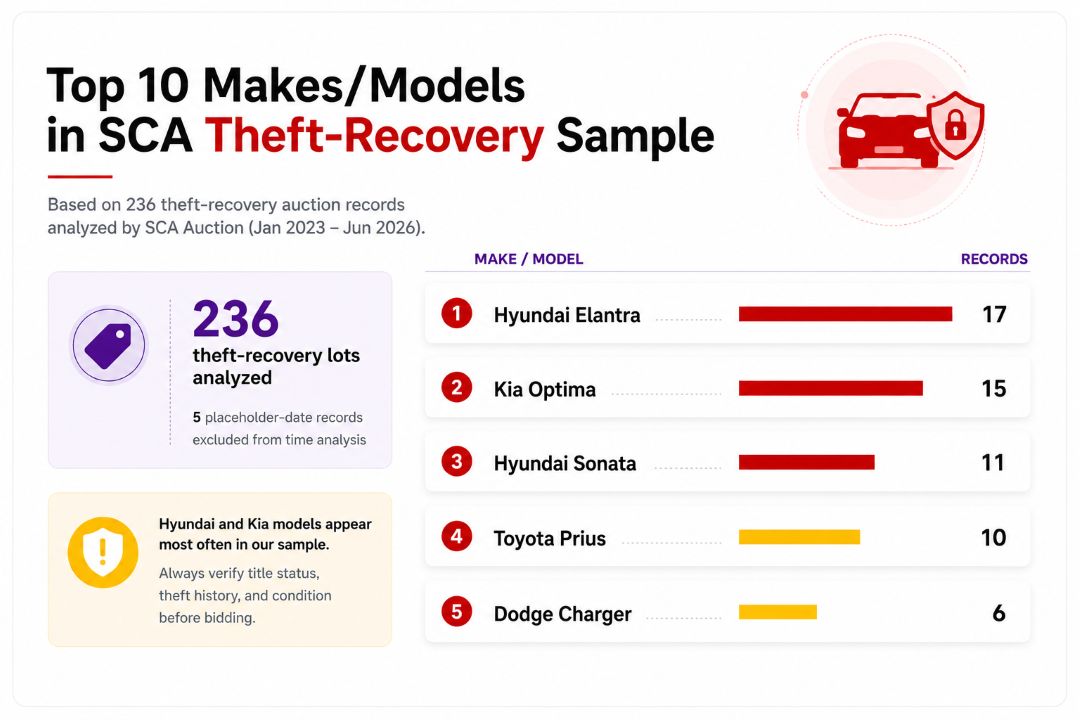
SCA’s sample reflects real lanes: sedans, hybrids, and performance models appear often. Hyundai and Kia models need extra attention. Some trims were frequently targeted by thieves. Compare theft history, paperwork, and visible condition before bidding.
Title Mix Matters More Than the Theft-Recovery Label
The “theft-recovery” label does not tell the whole story. The exact title type determines whether the car is easier to register, harder to insure, limited to certain buyers, or discounted later at resale. The chart below shows which title types appeared most often and why salvage-related paperwork deserves extra attention.
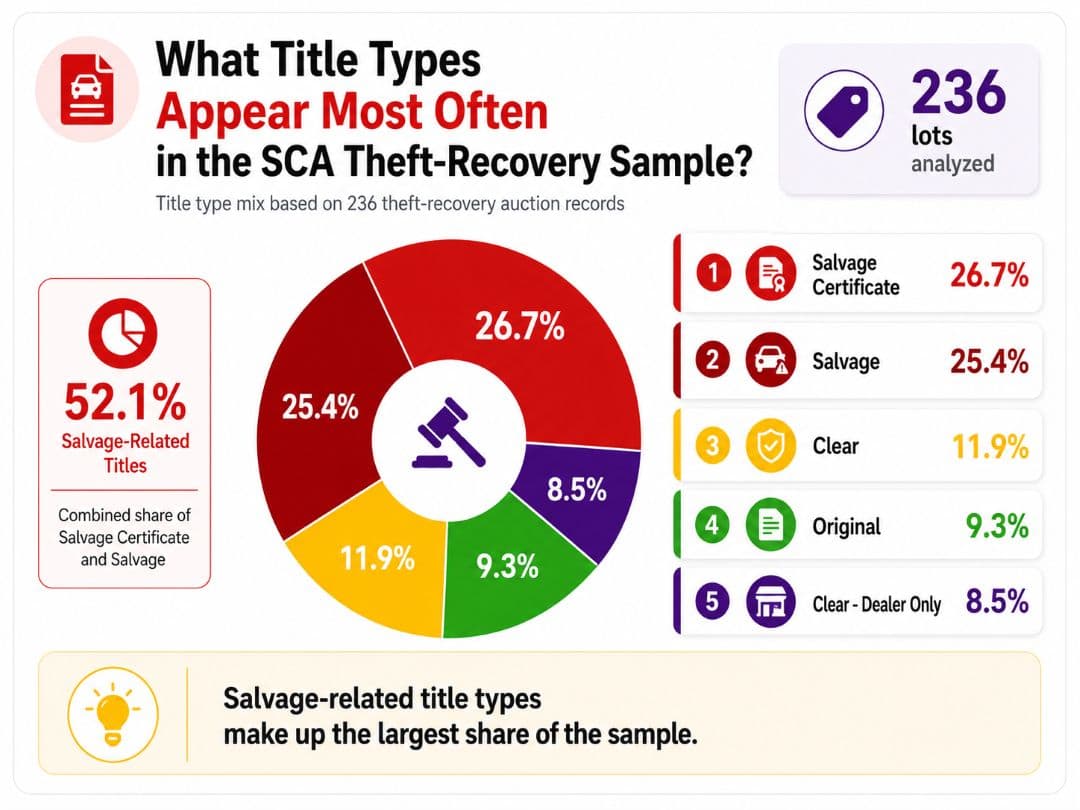
Many recovered stolen cars enter inventory with salvage paperwork, while others still show clear or original paperwork. That affects registration, insurance companies, financing, and resale.
Theft-Recovery vs. Salvage vs. Rebuilt Title
A salvage title due to theft is not the same as collision salvage. A flooded car may receive a brand because water damaged major systems. A theft loss may receive a brand because the insurer settled the claim or because the car was a total loss under state rules. When the vehicle is recovered, the state decides whether the title status changes or needs inspection. Read the title designation before transport is arranged.
| Title Type | Trigger Event | Typical Buyer Restriction |
| Clean title | No state brand, though records may show a stolen vehicle event | Easier to insure and finance, but disclose known vehicle history |
| Salvage title | Carrier treats the unit as a loss after theft, collision, flood, or fire | Usually cannot be registered until rebuilt |
| Theft recovery/special title | The state uses a theft-specific brand | May require theft inspection, receipts, or disclosure |
| Rebuilt/reconstructed | Salvage vehicle restored and passed state review | Registration may be allowed; insurance companies may limit terms |
| Parts-only/nonrepairable | Legal restriction blocks road return | Usually no registration; parts or export only |
How a Theft-Recovery Title Becomes a Rebuilt or Reconstructed Title
A rebuilt title due to theft usually starts when insurance companies settle the loss, take possession, and process a salvage title. After the car is found, the buyer or rebuilder follows the state inspection path to obtain rebuilt or reconstructed paperwork.
This chain is where title jumping becomes risky. The seller should not skip assignments or hide the transfer. Match every bill of sale, VIN, and title signature before money changes hands.
Theft-Recovery Title Rules by State
Stolen and recovered vehicles vary from state to state. Some states fold theft recovery into standard salvage rules. Others use a separate brand or inspection. A car is considered a total loss when the insurer decides that repair or recovery costs exceed the vehicle’s value under state rules. Confirm salvage title requirements before bidding because states may require hard-to-get forms after export.
| State | Branding Approach | Rebuilt-Title Path | Notable Restriction |
| California | Usually follows revived salvage rules | Available after DMV/CHP checks | California DMV revived salvage may require CHP and brake/light checks. |
| New York | Salvage theft units go through the Anti-Theft Program | Available after DMV salvage examination | New York DMV salvage exam checks for stolen vehicles or stolen parts. |
| Texas | May be salvage or nonrepairable | Available after inspection | Texas DMV salvage brands should be checked. |
| Florida | Salvage rebuildable requires rebuilt processing | Available after rebuilt inspection | FLHSMV rebuilt procedure requires rebuilt-state application. |
| Illinois | Rebuilder-focused salvage process | Licensed rebuilder inspection | Illinois salvage guide limits rebuilt processing to licensed rebuilders. |
How to Calculate the Landed Cost of a Theft-Recovery Auction Vehicle
The winning bid is only the first number. A theft unit can look cheap until fees, shipping, keys, diagnostics, and title steps add up. Use the actual value as the ceiling. If the car with a salvage title cannot be registered now, include storage. Calculate the landed cost before buying a vehicle.
Use this order before bidding:
- Start with ACV or retail market value for cars with clean titles.
- Add auction, documentation, gate, and broker fees.
- Add shipping, loading, storage, and local pickup.
- Estimate keys, locks, ignition, programming, and immobilizer work.
- Add missing components, body labor, diagnostics, and repair costs.
- Add title, inspection, registration, taxes, and compliance fees.
- Subtract the expected resale value discount for theft history.
- Keep a 10–15% reserve for hidden surprises after pickup.
Winning Bid as % of ACV
Winning bid as a share of ACV shows whether a lot is a deal. In our SCA Auction sample, the median theft-recovery vehicle sold for 28.3% of ACV, but the discount was not evenly distributed. Clean/original-title theft recoveries traded near 39.2% of ACV, while salvage/rebuildable-title vehicles traded around 26.8%. That gap prices title risk, inspection risk, and resale friction.
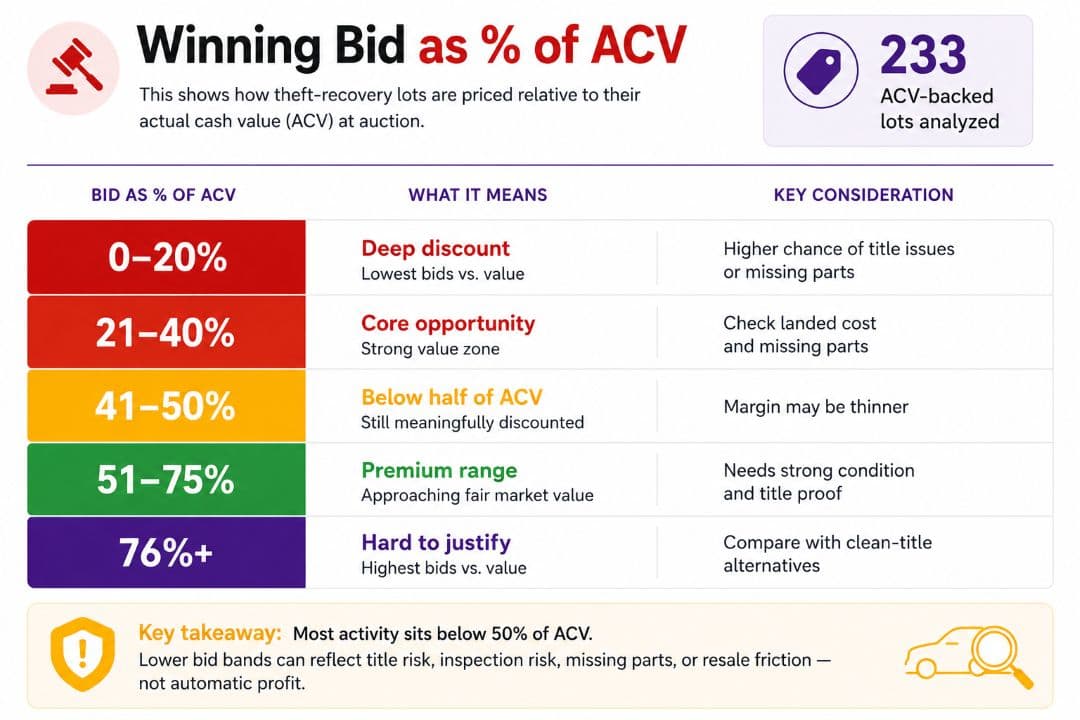
A low bid-to-ACV ratio is not automatic profit. The repair cost distribution can erase the spread if the car needs:
- Keys.
- Modules.
- Airbags.
- Wheels.
- Glass.
- Catalytic converter.
NHTSA’s Vehicle Theft Prevention page also notes that one motor vehicle was stolen every 48 seconds in 2025.
Price-to-ACV Ratio: The Metric That Makes Auction Lots Comparable
Price-to-ACV ratio puts a compact and a performance sedan on the same scale. A $6,000 bid may be high for one car and low for another. The ratio shows whether the discount is real after the conditions and paperwork.
Median Bid-to-ACV by Title Group
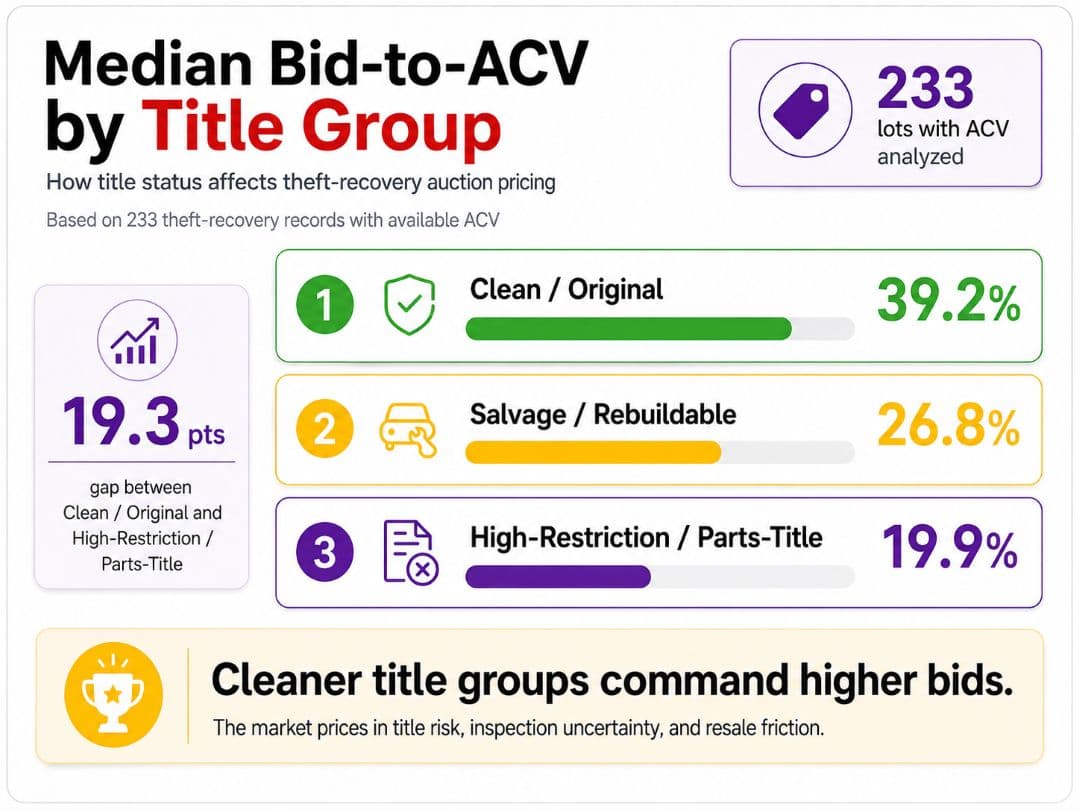
The spread is logical. A cleaner theft unit brings confidence. Salvage and rebuildable units trade lower. Insurance companies, lenders, and buyers price uncertainty.
Where Are Theft-Recovery Lots?
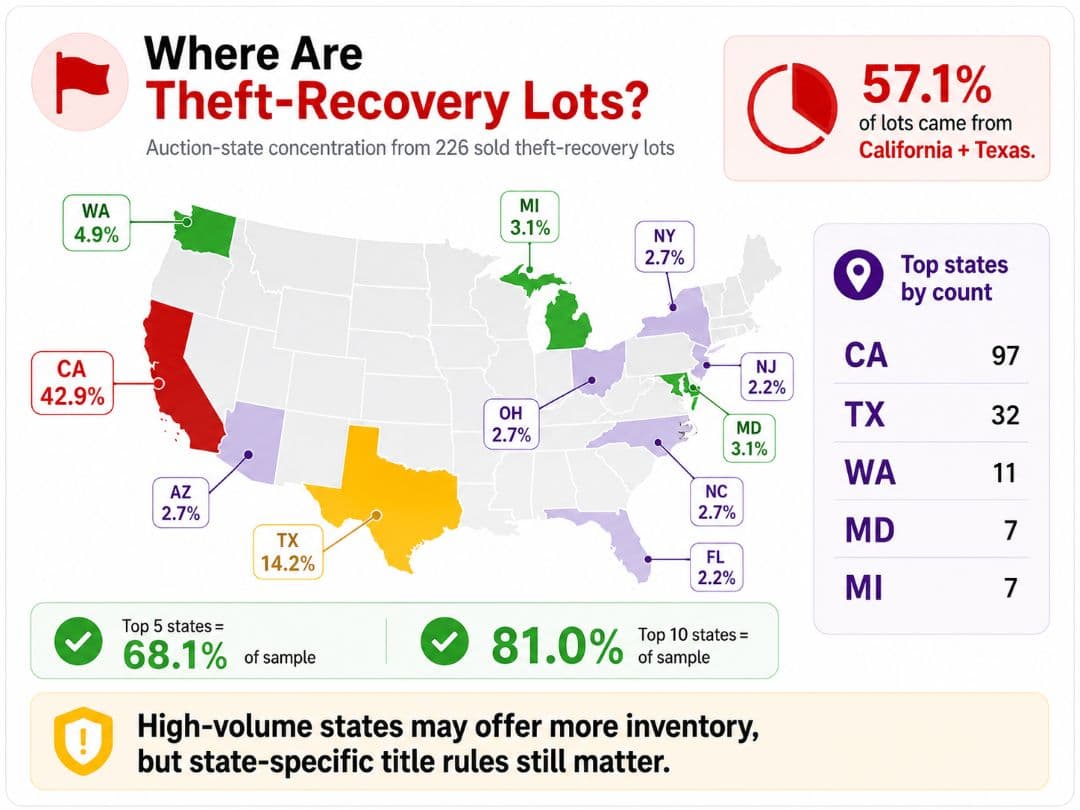
After looking at the price benchmark, location is the next factor buyers should check. In our SCA Auction sample, theft-recovery inventory was not evenly distributed across the U.S.: California and Texas alone accounted for 57.1% of sold theft-recovery lots. This matters because auction location can affect not only availability, but also transportation cost, state title rules, registration requirements, and the final economics of the deal.
What Parts Are Commonly Missing From Theft-Recovery Vehicles?
Not every stolen vehicle is accident-damaged. Some are recovered within days with minor lock or ignition damage, while others are stripped before auction. Used car buyers should read photos like a parts invoice. If a component is missing, price OEM availability before bidding.
Verify the following elements before bidding:
- Keys, fobs, ignition cylinder, door locks, and steering column trim.
- Airbags, seatbelts, and SRS module.
- Catalytic converter, exhaust sensors, and underbody shields.
- Wheels, tires, spare tire, jack, and wheel locks.
- Headlights, taillights, mirrors, and cameras.
- Infotainment screen, ECU, BCM, battery, and wiring harnesses.
- Hybrid battery components on Prius and similar models.
- License plates, manuals, charging cables, and personal-property remnants.
What Does Run & Drive Status Add to a Theft-Recovery Auction Lot?
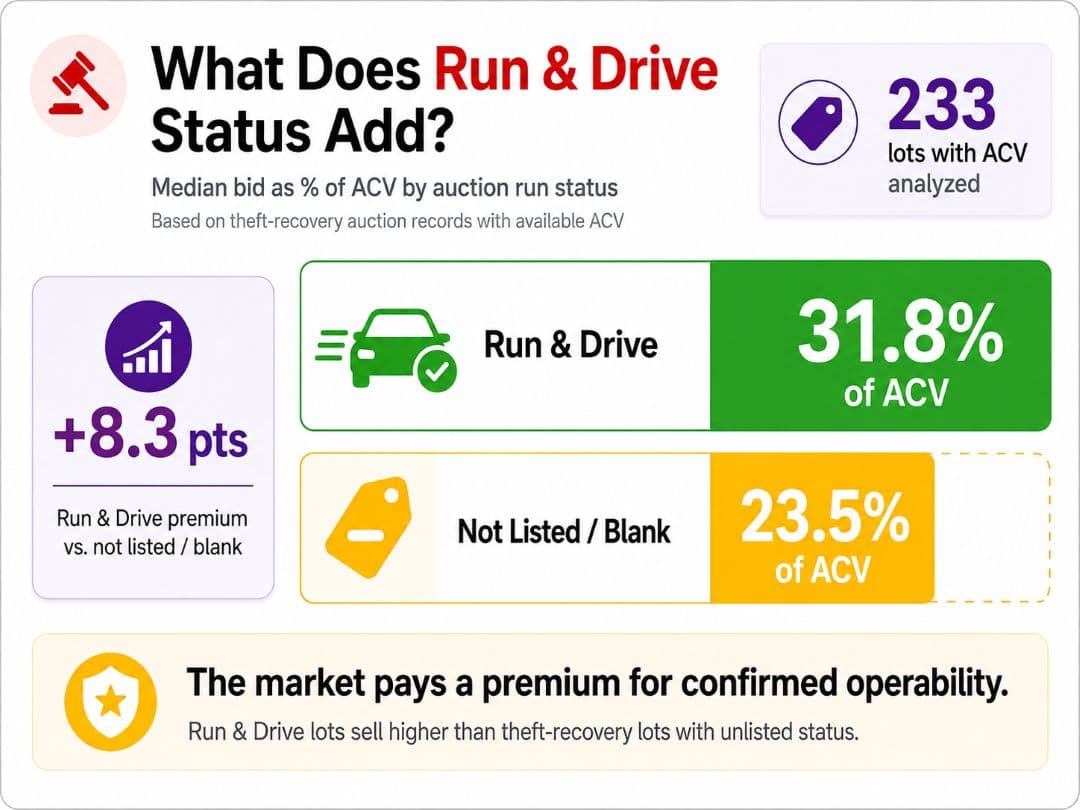
The market pays a premium for confirmed operation. Run & Drive does not guarantee roadworthiness. However, it shows the engine started, and the vehicle moved at listing time. That reduces uncertainty around drivetrain, ignition, and electronics. It also matters when a theft unit has no visible collision damage but may still have wiring issues.
SCA makes that signal easy to use. Filter for Run & Drive listings. Compare photos. Keep a margin for surprises.
Insurance, Financing, and Resale: What Happens After You Repair the Car?
After restoration, the brand may remain forever. Some insurance companies will insure only liability; others may offer full coverage after photos or inspection. Financing can be harder because financing eligibility restrictions often follow branded paperwork. If there is a loan balance, gap insurance may matter when the insurance payout is short. A comprehensive vehicle history report may show the title brand, theft record, salvage history, and reported damage.
Comprehensive coverage is normally tied to theft protection. The Insurance Information Institute gap insurance guide explains that gap coverage can cover the difference between the value and the amount owed after a covered loss.
Expect these post-restoration realities:
- Insurance companies may ask for photos, receipts, or a state rebuilt title.
- An insurer may exclude physical damage coverage on branded vehicles.
- Lenders may decline salvage or rebuilt collateral.
- Resale shoppers may demand a discount even when the car runs well.
- Dealers may appraise the vehicle lower because brands affect a vehicle’s value.
- Private buyers want proof that the stolen vehicle was restored legally.
Will a Branded Theft-Recovery Vehicle Lose Value Forever?
Usually, yes. A theft brand may look safer than flood or frame damage, but it remains part of the vehicle’s history. The discount depends on title type, mileage, work quality, documentation, and demand. Clean paperwork helps, while salvage or rebuilt records typically sell for 20–40% less.
Final Pre-Bid Checklist When Buying a Theft-Recovered Car
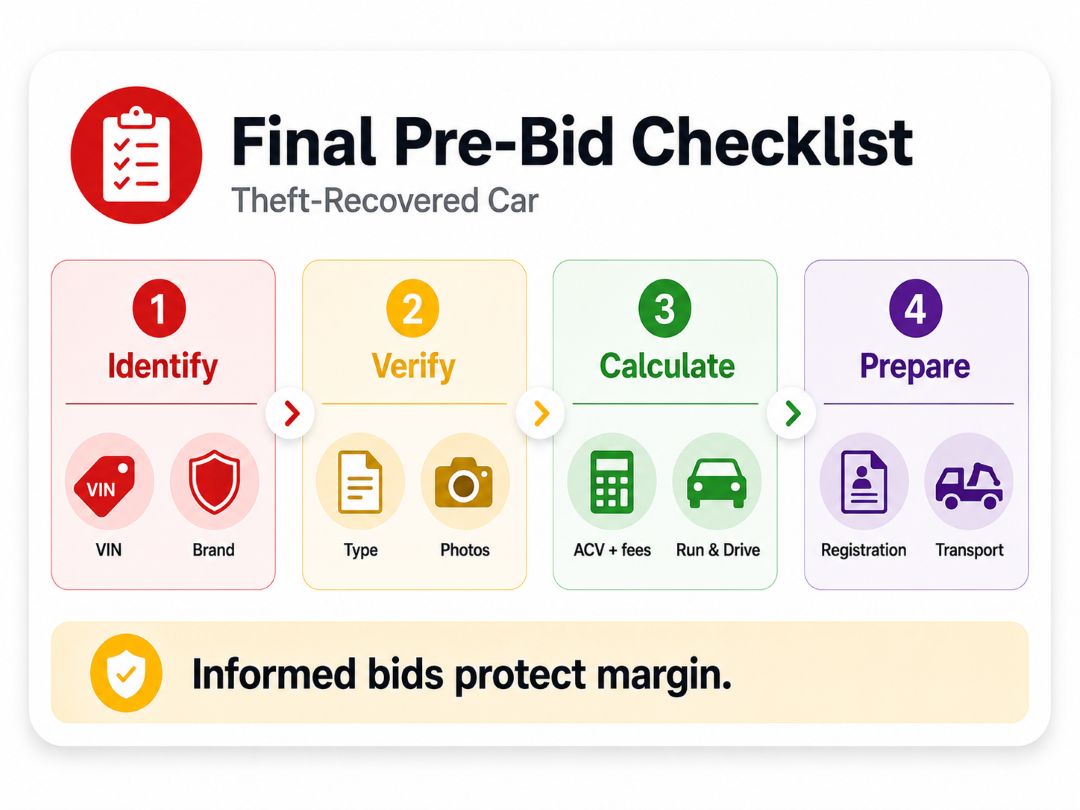
A theft-recovery auction buy should never be based on photos alone. Start with a VIN decoder. Compare listing details, title documents, auction notes, and outside records. The goal is to make informed decisions before bidding. If the car was stolen and subsequently recovered, documents matter as much as condition. A thorough inspection protects your margin.
Follow this step-by-step checklist:
- Decode the VIN. Confirm year, make, model, trim, engine, and drivetrain.
- Read the certificate of title and identify the exact brand.
- Check whether it is a salvage title, original title, or dealer-only document.
- Inspect photos for missing parts. Check for open panels, broken glass, and cut wiring.
- Compare ACV, bid range, fees, and cost of repairs before bidding.
- Verify whether the listing says Run & Drive, starts, or has a blank status.
- Confirm requirements for stolen and recovered paperwork before registration.
- Plan transport, storage, insurance coverage, and post-sale inspection.
Key Takeaways
- SCA Auction analyzed 236 theft-recovery auction records from January 2023 through June 2026.
- The median theft-recovery vehicle in the sample sold for 28.3% of ACV.
- Clean/original-title theft recoveries traded higher, at 39.2% of ACV.
- Salvage/rebuildable-title theft vehicles traded lower, at 26.8% of ACV.
- The pricing gap reflects specific risks. These are title risk, inspection risk, and resale friction.
- Winning bid excludes fees, transport, inspection, repair, registration, and taxes.
A theft-recovery auction car can be worth buying. The title, condition, landed cost, and resale plan should support the discount.
FAQ
Can I Register a Salvage Theft Vehicle Immediately After Buying It?
Usually no. Most states require a rebuilt inspection. They also need proof of ownership, parts receipts, and title processing. After that, a salvage theft vehicle can be registered for road use.
What Happens If Stolen Parts Are Found on a Rebuilt Theft Car?
The state may reject the rebuilt application. The officials can seize the parts, delay the title, or refer the case to law enforcement.
Can a Theft-Recovery Vehicle Still Qualify for Manufacturer Warranty Coverage?
Sometimes. Warranty coverage depends on the manufacturer, title record, mileage, and the cause of failure. Also, pay attention to whether salvage branding or improper repair work voided the original factory warranty.
Can I Export a Recovered Vehicle to Another Country?
Yes. However, export rules, customs paperwork, title type, and destination-country import laws matter. Confirm eligibility before bidding on high-restriction or parts-only documents and arranging transport.
Is Theft-Recovery Worse Than Flood Damage?
Usually no. Theft recovery is often more predictable than flood damage. Water can harm wiring, modules, and safety systems long after the car appears dry.