Contents
Buying a car with reported fire damage is usually not a good idea, because heat and smoke can cause hidden problems in the electrical system, fuel components, and structural integrity. It may only be worth it if the damage was minor, fully documented, and confirmed safe by a specialist inspection. Otherwise, the risk of costly repairs, insurance limitations, and long-term reliability issues is high.
What Does “Car Fire Damage” Mean for a Buyer?
For a buyer, car fire damage means the problem is wider than the burned spot. Heat moves through metal and plastic, and smoke reaches connectors and trim. Water or foam used to stop the fire can cause damage later. A photo of a car on fire will not reveal the true cause or extent of the damage. The aftermath of a car fire matters more than photos.
Any car after a fire should be judged by these basics:
- Title status: See whether the motor vehicle was branded salvage, rebuilt, or total-loss.
- Origin of the event: Ask where the vehicle fire started. Examine what led to the fire. Check whether it followed a collision, defect, or poor repair.
- Repair proof: Ask for photos, invoices, and a parts list showing the extent of the damage.
- Open safety actions: Check for any recalls tied to the model or VIN.
- Emergency details: If the seller says the car caught fire on the road, ask whether the driver turned off the engine, called the fire department, and moved away from the vehicle to a safe distance.
What Exactly Gets Damaged in a Car Fire?
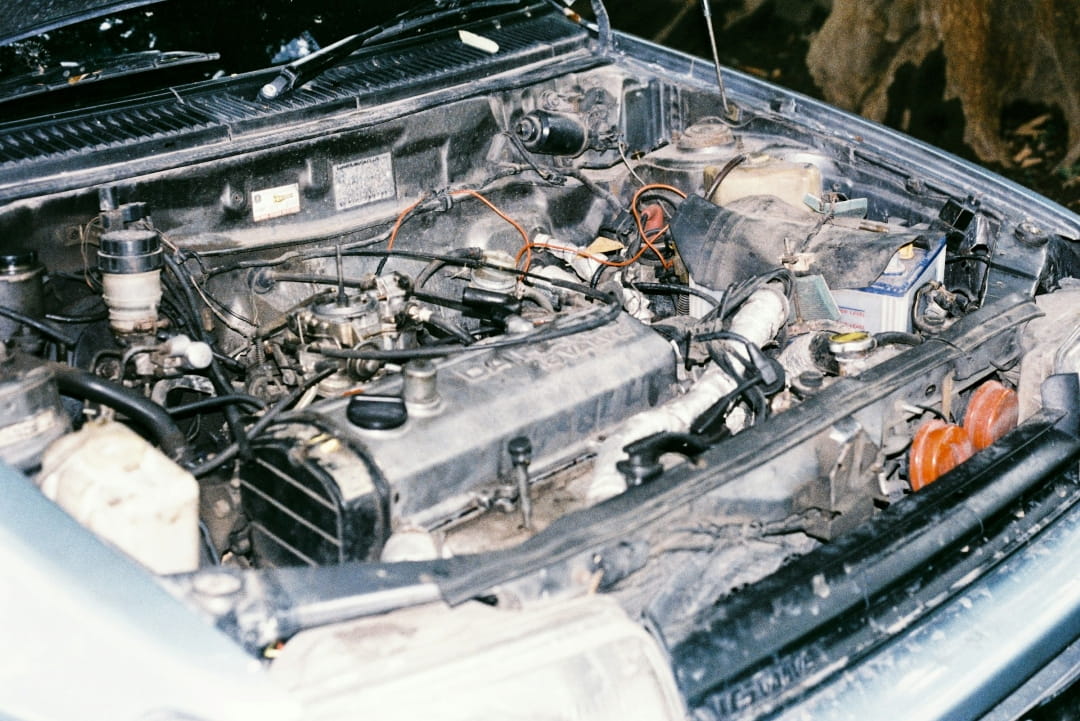
A vehicle fire damages more than the surfaces. Flames, smoke, pressure, residue, and cleanup chemicals can harm systems well outside the visibly burned area. Heat can travel through metal panels and wiring paths, affecting components that appear untouched. Even areas far from the origin of the fire, such as connectors, control modules, or hidden insulation, may degrade over time.
Electrical Systems
Electrical damage is usually the biggest problem because it hides. Heat can soften insulation and loosen pins without clear burn marks. Later, vibration and moisture finish the job. This hidden electrical damage can turn a cheap purchase into a costly project. A common cause of car fires is tied to malfunctions and electrical or mechanical issues, so a burned system deserves close attention. To spot trouble, inspect these parts:
- Harnesses and wiring: Look for stiff insulation, brittle sections, or shiny melted spots.
- Fuse boxes and relays: Even light warping can mean deeper heat damage inside.
- Grounds and battery cables: Poor contact can create a spark and charging faults.
- Sensors and modules: A small connector defect can trigger random warning lights.
- Switches and lamps: Flickering or delayed response can point to electrical fires.
NFPA says that vehicle fires often begin with malfunctions and electrical failures, and wire or cable insulation is one of the first items most often ignited.
Fuel System and Engine Components
The engine bay is where many vehicle fires begin, so check carefully. Many vehicle manufacturers warn that gasoline or diesel fuel near hot parts raises danger. Seals harden, clips weaken, and plastic housings warp. A small leak may not show up cold, then appear later. The leading cause of vehicle fires is often linked to mechanical failure, faulty wiring, or damaged parts. Other causes of vehicle fires include poor maintenance and failed connectors. This table shows the high-risk areas:
| Area | What the Fire Can Do | Why It Matters Later |
| Fuel lines and injectors | Dry seals or loose clips | A fuel seep can ignite near hot parts |
| Vapor hoses | Cracks or shrinkage | Unusual odors or warning lights |
| Sensor connectors | Melted locks or weak contact | Timing and fueling faults |
| Belts and pulleys | Glazed rubber, weak bearings | Noise or charging trouble |
| Nearby fluid lines | Damaged seals | New leak points, plus oil and grease near the heat |
Structural Integrity and Heat Stress
Visible flames are only part of the problem. Structural integrity can drop when heat changes steel, aluminum, welds, and bonded joints. Metal can lose its temper, and alignment points can shift.
That is why car frame damage after a fire deserves the same caution as damage after a serious car crash.
The Biggest Risk: What You Can’t See After Fire Damage
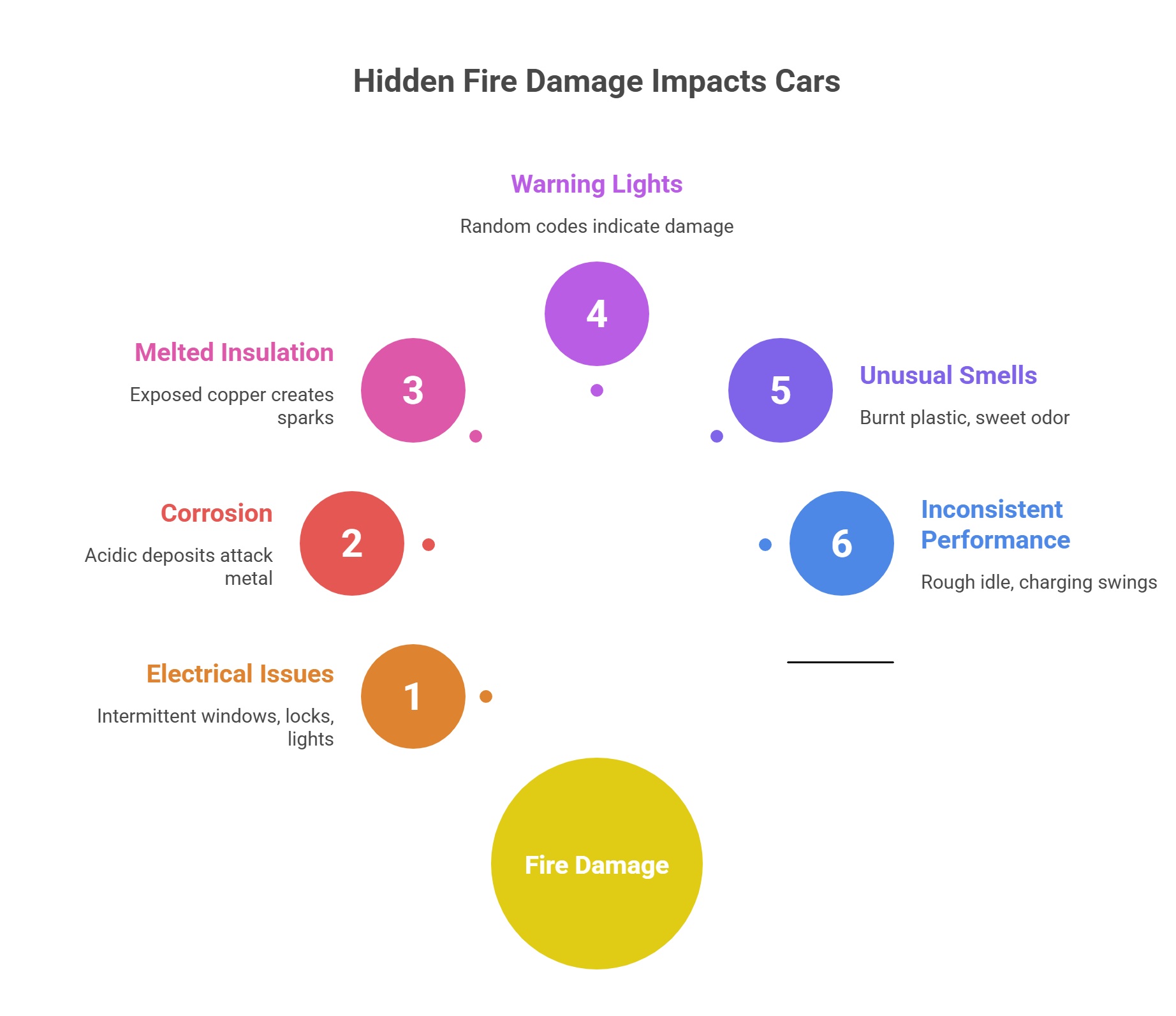
A freshly cleaned interior can be misleading. Fresh trim often hides what heat and smoke did underneath. The main danger is delayed damage. Residue attracts moisture. Toxic smoke can stay trapped in ducting and padding. When a seller says the car burned only in one area, remember that vehicle fire can involve damage paths you cannot see at first glance. Use this checklist:
- Intermittent electrical issues: windows, locks, fans, or lights that work only sometimes usually mean connector damage.
- Corrosion from smoke residue: acidic deposits keep attacking metal long after cleanup.
- Melted insulation: softened coverings can later expose copper and create another spark path.
- Warning lights or sensor errors: random codes often point to deeper electrical damage, not a simple reset.
- Unusual smells: burnt plastic, sweet odor, or stale fume traces suggest residue or heat damage remains.
- Inconsistent performance: rough idle, charging swings, or cooling changes often mean deeper system trouble.
Why Do Fire-Damaged Cars Fail Months Later?
They fail late because the first repair often restores function, not durability. Plastic gets brittle, connectors corrode slowly, and seals keep shrinking.
That is why vehicle fires often start one repair bill and lead to several more. Rain, vibration, or summer temperatures are perfect conditions for a fire.
How Much Should a Fire-Damaged Car Cost?
A low price is not enough. The question is cost. Fire history creates long-term car value loss because future buyers, lenders, and insurers treat the vehicle as a higher risk. Use this table to compare what is cheap now with what may become expensive later:
| Type | Upfront Cost | Hidden/Delayed Cost | Predictability |
| Light smoke exposure | Cleaning, filters, trim work | Smell return, switch corrosion, sensor issues | Medium |
| Engine-bay fire | Hoses, harnesses, modules, labor | Repeat leak, ignition trouble, and no-start faults | Low |
| Cabin or dash fire | Electronics, airbags, glass, trim | Deep wiring faults, denial risk, and weak resale | Very low |
| Heavy burn | Cheap purchase price | Rebuild cost can exceed value quickly | Extremely uncertain |
Legal and Insurance Reality: What Most Buyers Miss
A vehicle may be declared a total loss. If a defect caused the event, the law can help determine who may be held liable. A car accident attorney or legal counsel, and component manufacturers may be relevant after a crash. In many states, a vehicle that has been declared a total loss receives a branded title (such as salvage), which signals to future buyers that the damage exceeded a significant portion of its value and affects its legal and resale status.
Can You Register, Insure, and Resell It Later?
Sometimes, but it is harder than many buyers expect. Some states require a state inspection before a rebuilt title returns to the road. Some auto insurance companies limit coverage after a vehicle fire. Resale is tougher because vehicle history reports can expose prior damage. In addition, buyers often face higher insurance premiums, fewer financing options, and stricter lender requirements. Even after passing inspection, a rebuilt title can reduce buyer trust, making the car take longer to sell or forcing a lower price than expected.
How to Check a Fire-Damaged Car Before You Buy
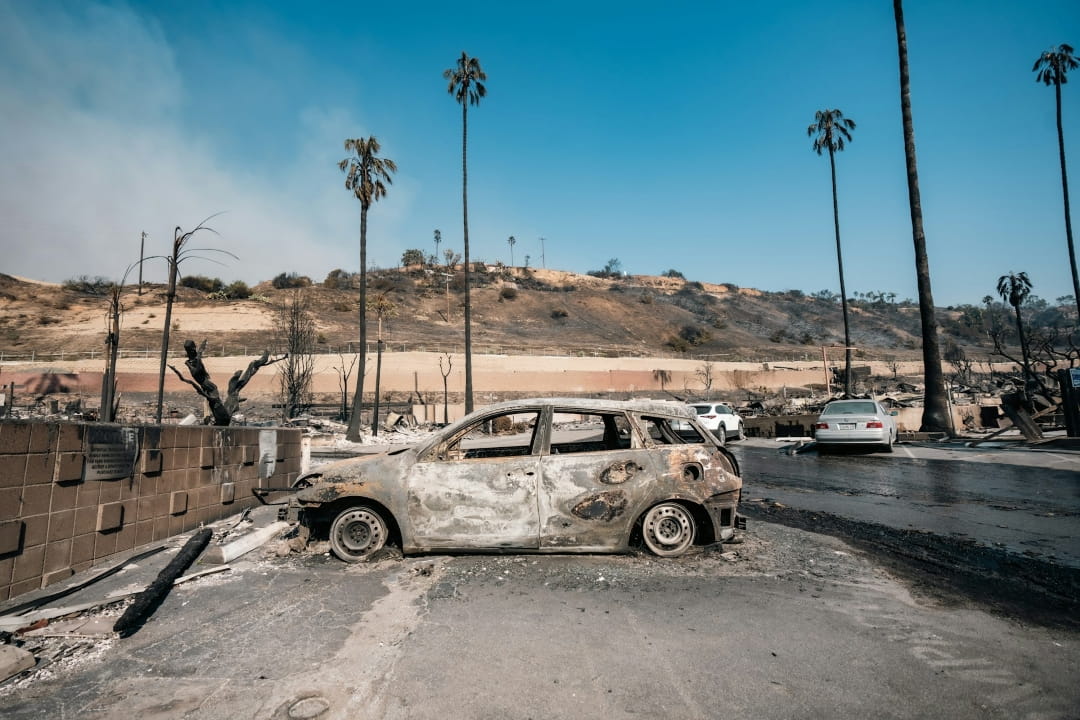
Do not trust photos or a short drive. Start with the records, inspect the repairs, then test the systems warm. Use a reliable VIN decoder. Confirm the build and check open campaigns.
Follow these steps:
- Run the VIN. Confirm model details and any open recalls.
- Pull a vehicle history report. Review title brands, salvage status, total-loss records, and odometer history.
- Read the repair file. Replaced harnesses, modules, airbags, and ducts matter more than “cleaned after fire.”
- Get a specialist inspection. A normal used-car check is not enough.
- Scan every module and road-test hot. This is where many hidden faults appear.
- Inspect the hood or trunk carefully, but do not open them if you suspect active heat.
- Ask how the event started. Check whether anyone stayed away from the car and whether similar units have caught fire since any related service campaign.
Fire-Damaged Car vs Clean Used vs Leasing
A fire-damaged vehicle makes sense only in a narrow case: light damage, full documentation, a specialist report, and a low price. For most shoppers, a clean used vehicle is easier to own. Leasing trades ownership risk for payment certainty and warranty support. Use this comparison:
| Option | Pros | Main downsides | Best fit |
| Fire-damaged vehicle | Lowest entry price | hidden electrical damage, weaker resale, future fire risk | Only for experienced buyers |
| Clean used car | Better history, easier financing | Higher purchase price | Best long-term value |
| Lease | Newer model, warranty, lower surprise repair cost | No ownership equity, mileage limits | Best for low-risk budgeting |
A clean option often wins because the cheap alternative can bring more repair bills.
Key Takeaways
The low price is rarely the full story. Remember these points:
- Follow a clear decision rule: buy only with light damage, full records, and a specialist inspection.
- Watch the hidden risk: electrical damage and delayed failures sink most deals.
- Face the money reality: total ownership cost matters more than a low price.
- Expect legal limits: salvage history can cut value and coverage.
- Verify everything: run history checks and inspect repairs.
- Use hard stops: warning lights, smoke smell, poor records, or fire hazards mean walk away.
- Keep the safer option in mind: a clean used car is often better long-term.
FAQ
Can Parked Cars Catch Fire Spontaneously?
Yes, vehicles catch fire while parked. This may be due to an electrical short, overheating parts, fluid loss, or defects.
Are Hybrid Vehicles More Likely to Catch Fire on the Road?
Not necessarily. Compared to a gasoline-powered model, an electric vehicle (EV) or hybrid can burn for different reasons. However, fires are rare in such vehicles. Recall history still matters.
Can the Exhaust System Alone Start a Fire?
Yes. A catalytic converter can ignite debris, leaked fluids, or combustible material after driving. It’s common when hot shields, trapped grass, or flammable liquids sit under the car.
Should You Buy a Fire-Damaged Car from a Dealer or Private Seller?
A dealer is usually safer. Paperwork and disclosure are stronger. Nonetheless, dealer status means little without proof. Consider vehicle history verified repair records.
Is It Possible to Fully Restore a Burned Car to Factory Condition?
Rarely. A badly burned vehicle can run again after severe fire damage. However, matching factory conditions in its systems is uncommon.