Contents
A rebuilt title typically lowers a car’s value because buyers face higher resale risk, fewer trade-in options, and possible insurance restrictions. There is no universal rebuilt-title discount, but SCA auction data show rebuilt vehicles sold at a median of 29.4% of ACV, compared with 40.2% for clean/original-like vehicles, about an 11-percentage-point gap. To decide what to pay, start with the market value of a comparable clean-title car, then subtract the expected title-related resale loss, remaining repairs, inspection and auction costs, transportation, insurance limitations, and a reserve for hidden damage.
What Is a Rebuilt Title, and How Does a Car Get One?
A vehicle enters the rebuilt process after a collision, flood, fire, theft, or vandalism. After severe damage, an insurer may declare the car a total loss. The state records a salvage car title, blocking normal registration. After repair and a state inspection, it may receive a rebuilt title. Rules vary by state. The California DMV’s revived-salvage guidance lists possible documents and inspections.
The usual sequence is:
- The car is damaged or recovered.
- It is declared a total loss, and the vehicle’s title receives a salvage brand.
- A rebuilder buys the salvage title car and completes the repair.
- Receipts, photos, and parts records are submitted.
- The vehicle must pass a state inspection or anti-theft examination.
- The state issues a rebuilt title after approval. New titles do not erase histories of vehicles with rebuilt titles.
The Difference Between Clean, Salvage, Rebuilt, and Reconstructed Titles
Understanding salvage vs rebuilt title value begins with title status. A clean title shows no active salvage brand. However, it does not guarantee no prior damage. A car with a salvage title has a brand that indicates that the car has not completed rebuilding. The difference between a salvage title and a rebuilt title is completed work and state approval. “Reconstructed” may describe rebuilt or assembled vehicles. The New York DMV explains that its examination focuses on identity and stolen parts, not repair quality.
This table compares the four main title categories:
| Title Type | What It Means | Can It Be Driven or Registered as Is? | Is It Typically Insurable? | Does It Retain Full Resale Liquidity? |
| Clean/original-like | No active salvage-related brand | Usually, with current registration | Usually | Usually |
| Salvage | Branded before legal rebuilding | Usually no | Not for normal road use | No |
| Rebuilt | A vehicle repaired and approved under state rules | Often, after registration | Sometimes | No |
| Reconstructed | State-specific rebuilt or assembled classification | Depends on approval | Case by case | No |
How Much Does a Rebuilt Title Devalue a Car?
There is no universal rebuilt title car value. What the car is worth depends on age, mileage, brand, damage, documentation, location, and demand. The supplied SCA data show that rebuilt-title vehicles sell about 11 ACV percentage points below clean/original-like lots before vehicle-specific adjustments. That gap is a useful starting point rather than a fixed devaluation rate: the actual loss in value can be larger or smaller depending on the individual vehicle.
What Did Rebuilt Cars Sell for Compared with Clean-Title Cars?
SCA bids show how buyers price uncertainty. Rebuilt-title vehicles sold at 29.4% of ACV, versus 40.2% for clean/original-like lots. Salvage/branded inventory reached 27.5%. One discount cannot fit every car with a rebuilt title.
Title jumping means transferring a vehicle without first titling it in the seller’s name. The Wisconsin Department of Transportation warns that this can hide an unlicensed seller’s responsibility.
The chart below compares median pricing across title groups:

Rebuilt/rebuildable lots had a 10.8-percentage-point median bid-to-ACV gap versus clean/original-like lots.
How Often Do Rebuilt Lots Sell Below Half of ACV?
Most rebuilt-title vehicles in the valid sample sold far below ACV. More than half sold at 30% or less. Overall, 91.2% sold at or below 50%. The median bid was $3,438, compared with a median ACV of $13,558. These are bids, not ownership costs. Fees, transport, inspection, registration, and repair costs come later.
This chart summarizes the main rebuilt-lot sale thresholds:

Why Is There No Single Rebuilt Title Discount?
Rebuilt titles describe history, not present condition. Two identical rebuilt vehicles may differ in structure, corrosion, airbags, repair history, documentation, and insurance coverage. Local demand changes the car’s value, while branded history affects insurance costs and resale. Price the VIN, original loss, workmanship, future resale, and coverage restrictions instead of using one flat discount.
How Do Collision, Water, Theft, and Cosmetic Damage Affect Rebuilt Value?
Damage type changes how buyers price rebuilt titles. Collision can affect structure, suspension, sensors, and airbags. Water can cause delayed corrosion and module failures. Theft recovery may involve missing parts or cut wiring. “Other” may include cosmetic or minor damage, not structural or safety-critical damage, likely explaining its smaller discount. Vehicles in the ‘Other’ category sold near the clean-title group (43.2% versus 41.0%); therefore, the result is plausible. The NHTSA flood-damage warning explains the extra risk.
The chart below compares pricing by reported damage type:

How Do You Calculate a Fair Price for a Rebuilt-Title Car?
Start with a true comparable, not the asking price. Subtract resale loss, repair costs, a hidden-damage reserve, insurance-related costs or limitations, fees, transport, and inspections. The result is your maximum risk-adjusted purchase price. One missed expense can erase the savings. Use several recent clean-title comparables that closely match the vehicle’s year, trim, drivetrain, mileage, and regional market rather than relying on a single listing.
Step 1 — Find the Right Clean-Title Comparable
Use recent sales for the same year, trim, drivetrain, mileage, and region. A car with a clean title but different equipment is a weak baseline. Confirm the VIN first.
Check:
- Year, trim, engine, drivetrain, and equipment.
- Similar mileage.
- Similar pre-loss condition.
- The same regional market.
- Retail, auction, and trade values.
- Three credible comparables.
Step 2 — Subtract Future Resale and Trade-In Loss
When selling a rebuilt-title car, expect lower resale value and buyer demand. Some dealerships will accept a rebuilt-title vehicle; others will not. You may keep the car now, yet eventually need to sell your car. Budget for the discount when you eventually sell the car. Treat that future loss as part of today’s purchase cost, even if you plan to own the vehicle for several years. A lower purchase price gives you more room to absorb a narrower buyer pool and weaker trade-in value later without losing the financial advantage of buying rebuilt.
Step 3 — Add Known Repairs and a Hidden-Damage Reserve
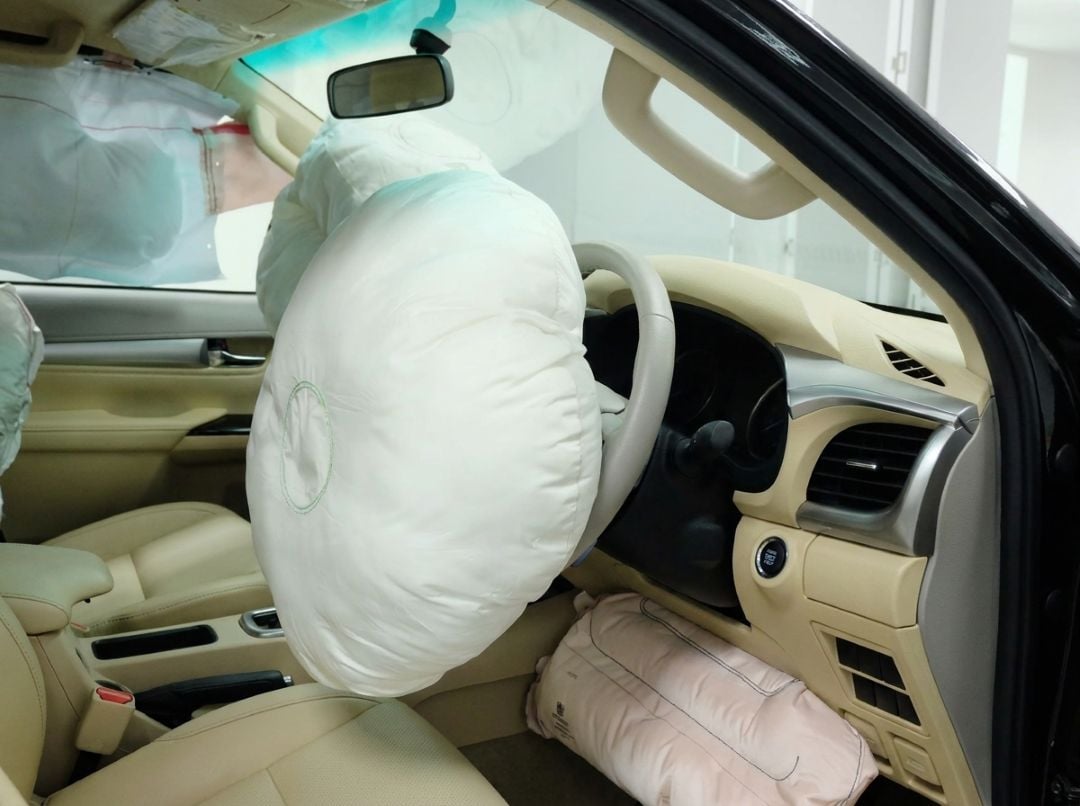
Review invoices, loss photos, scans, alignment results, and receipts. A full inspection of the rebuilt title car is crucial because faults can remain hidden. NHTSA’s replacement-airbag warning shows why restraint-system records matter.
Build a reserve for:
- Unfinished mechanical or body repair.
- Sensor and camera calibration.
- Airbags and crash sensors.
- Suspension, cooling, and electrical faults.
- Water intrusion or corrosion.
- A second inspection.
Step 4 — Add Auction Fees, Transportation, and Inspection Costs
The winning bid is not the total. Before you buy a rebuilt project through SCA, calculate transport, inspection, title, and registration. SCA’s buyer-fee information lists vehicle costs.
Include:
- Buyer, internet, storage, and document fees.
- Towing or transportation.
- Tax, title document, and registration.
- Inspection and diagnostic scanning.
- Required state checks.
- Storage delays.
Step 5 — Set a Hard Maximum Bid Before the Auction
Write the maximum before bidding: comparable value minus title discount, repair, reserve, fees, and required savings. Do not chase another buyer. Buying a rebuilt title car works only when savings survive every cost. Leave room for one unexpected mechanical, insurance, or paperwork problem. For example, if the clean-title comparable is $15,000 and your title discount, repairs, reserve, fees, and required savings total $6,500, your hard maximum bid is $8,500. If bidding reaches $8,600, the vehicle is already outside your calculated purchase limit, regardless of how close you are to winning it.
Do Age and Mileage Increase the Rebuilt-Title Discount?
Age and mileage compound the discount on rebuilt titles. Newer vehicles generally attract stronger demand, so 2020+ rebuilt titles received a softer penalty. Older lots performed worse. Mileage produced a clear gradient. Normal depreciation remains when title risk is added. Use both tables before you buy a car through SCA.
This chart compares pricing across model-year groups:

Rebuilt/rebuildable lots from 2020 or newer sold for 37.9% of ACV, above the 25%–29% range for older vehicles. Newer vehicles appear to carry a smaller relative penalty.
The chart below shows how pricing declines as mileage rises:

Use this framework: clean-title market value minus roughly 11 ACV points, then adjust for mileage, age, damage, uncertainty, insurance and resale limitations, and brand. It estimates value without making one average a rule.
Does Brand Reputation Still Matter on a Rebuilt Title?
Brand still affects what a car buyer pays for rebuilt titles. Toyota, Honda, and Lexus reached 37.0% of ACV. All other brands had a median bid-to-ACV ratio of 27.9%. The 9.1-point gap suggests a reliability premium. It does not prove every car with a rebuilt title from those brands is better. Condition, damage, and repair records still matter.
This chart compares the two brand groups:

Does Run and Drive Status Make a Rebuilt-Title Car Safer to Buy?
“Run and Drive” is a limited observation, not a structural or mechanical certification. It does not prove airbags, cooling, driver-assistance, or electrical systems work. A vehicle may move and still need major repair. Drivability does not remove the vehicle’s rebuilt-title status. Rebuilt and salvage groups remained below clean inventory. Treat the label as one data point, not proof the vehicle is safe to drive.
The chart below compares Run-and-Drive results by title group:

When Is a Rebuilt-Title Car a Reasonable Buy?
A vehicle with a rebuilt title may work when the history is transparent, and the savings remain large. Before you buy a used car, check state records. Use SCA’s official VIN decoder and run a recall search. Verify damage, car repairs, and auto insurance terms.
Look for these conditions:
- Photos show what happened to the car.
- The shop provides invoices, measurements, and calibration records.
- An independent specialist finds no structural, flood, airbag, or wiring concerns.
- The rebuilt title vehicle qualifies for local registration.
- Insurance companies are willing to quote liability and comprehensive coverage; some insurers offer coverage for rebuilt vehicles.
- The final price remains below a comparable used car.
- You can keep it long enough to reduce resale pressure.
When Should You Walk Away?
Walk away when ownership, damage, or workmanship cannot be proved. A passed examination may not establish safety. The New York DMV rules describe an anti-theft examination. Insurance companies may restrict coverage on rebuilt vehicles and charge different insurance rates. Appearance cannot price that risk.
Red flags checklist:
- The seller refuses to show the title or disclose its rebuilt status.
- State records and the description conflict.
- The seller is not named on the title.
- Loss photos or invoices are missing.
- Interstate title changes appear suspicious.
- Structure, airbags, or calibration cannot be verified.
- Water damage lacks corrosion testing.
- Insuring a rebuilt title is impossible, or rebuilt title car insurance costs erase savings.
- The seller says emissions testing proves full repair.
- You cannot sell a rebuilt title car without serious value loss.
Progressive explains that insurance for a rebuilt-title vehicle depends on the insurer and may have coverage limits.
Key Takeaways
- Rebuilt titles narrow demand and trade-in options.
- Rebuilt title cars can sell far below ACV, but price is only the start.
- Water damage carried the deepest discount; “Other” damage sold near clean inventory.
- Newer, lower-mileage Toyota, Honda, and Lexus lots performed better.
- Run-and-Drive status does not prove complete repair.
- Verify history, rules, insurance for rebuilt title vehicles, and exit price.
A purchase makes sense only when the documentation and discount outweigh repair uncertainty, insurance restrictions, and future resale or trade-in losses.
FAQ
How Much Value Is Lost When the Original Damage Location Is Unknown?
Unknown damage reduces confidence and value. Without photos or invoices, assume hidden structural, electrical, or safety work, increase the reserve, and lower your maximum offer.
Does Passing Emissions Testing Increase a Rebuilt-Title Vehicle’s Value?
Only slightly. It confirms emissions-system compliance, not structure, airbags, ownership, or complete restoration. A passing result can coexist with serious hidden collision or flood defects.
Does Repainting the Entire Vehicle Help or Hurt Rebuilt-Title Resale Value?
Quality paint helps appearance. However, unexplained repainting can hide damage. Documentation matters more when selling a car with a branded history and explaining the previous work.
Does a Rebuilt Title Affect the Value of Modifications or Upgrades?
Yes. Wheels, audio, suspension, or performance upgrades rarely recover full cost. Buyers first discount the title. Resale value might rise only for documented, desirable work.
Is the Manufacturer’s Warranty Valid on a Rebuilt-Title Vehicle?
It depends on the manufacturer. For example, Toyota’s guide excludes many salvage or total-loss vehicles. Recalls may follow different rules. Verify the VIN and warranty booklet.