Contents
To get a dealer license in Missouri, you must register a business, set up a compliant “established place of business,” obtain a required surety bond (typically $50,000, but you pay only a percentage), and apply through the Missouri Department of Revenue. If you regularly sell vehicles for profit, especially six or more per year, you are considered a dealer and must be licensed. Most applications are delayed or rejected due to location issues or incomplete documentation.
Key Takeaways
- Missouri draws a hard line once you reach six or more vehicle sales or displays in a year.
- An office, a lot, a sign, and an inspection matter more than branding.
- Retail, wholesale, and auction operations do not use the same class.
- Most owners need a surety bond, fees, photos, and a current policy.
- First-time used-car owners often need training and recent record checks.
- The fastest approvals come from matched names, matched addresses, and no gaps.
Do You Actually Need a Dealer’s License in Missouri?
Yes, if you want to operate a legitimate vehicle business, resell vehicles for profit, or get a license to buy cars at auctions, Missouri expects you to be licensed before you operate.
How Many Cars Can You Sell Without a License in Missouri?
Missouri law states that selling or displaying six or more vehicles within a year may classify you as a dealer without a dealer license. This applies even if you start with a small-scale activity, because intent matters as much as volume: buying vehicles specifically for resale, advertising multiple listings, or operating like a business can qualify you as a dealer. Getting licensed early protects you from complaints, enforcement actions, and delays if you later decide to formalize your operation.
That is why most people treat five or fewer private sales as the safer limit, while repeated resale activity moves you into business territory fast. Many new dealers in Missouri underestimate this rule.
Missouri treats six or more vehicle sales or display activities in one year as prima facie evidence that you are acting like a seller.
Legal Risks of Selling Cars Without a License
Missouri law lets complaints go to a prosecutor, and the state can treat repeat activity as unlicensed selling. That can bring criminal exposure, tax trouble, and a harder road when you later file a dealer license application.
Here are some legal risks:
- Fines and criminal exposure tied to unlicensed sales.
- Administrative penalties and non-compliance penalties later.
- Application problems later because your file looks careless.
- Tax issues if you never register sales activity properly.
- Consumer complaints over ads, title delays, or plate misuse.
- Enforcement risk once a complaint reaches the state or county.
Retail Dealer vs Wholesale Dealer: Which License Do You Need?
Missouri has several license classes. A wholesale operation works inside the trade only. If you want to sell new vehicles, you need franchise authority, too. This is not related to a broker license classification. Missouri regulates brokering separately. New auto sellers often choose the wrong class.
For anyone researching how to become a car dealer, use the table below. It reflects Missouri’s definitions and limits for each class.
| License Type | Best Use | Public Sales? | Main Point |
| Used motor vehicle dealer | Independent retail dealership | Yes | Best fit for most startup dealership plans |
| Wholesale motor vehicle dealer | Dealer-to-dealer inventory moves | No | Cannot make retail sales |
| Franchised new motor vehicle dealer | New motor franchise sales | Yes | Needs franchise agreement |
| Public motor vehicle auction | Public auction operator | Limited by auction rules | Separate auction class; you cannot conduct public sales under a wholesale-only setup |
| Wholesale motor vehicle auction | Dealer-only auction services | No | Buyers must be licensed dealers |
What Are the Requirements for a Missouri Dealer License?
A Missouri auto dealer license usually needs business registration, the right class, a real business site, a bond, insurance, owner records, site photos, and fees. In practice, this means your business must be registered under the exact name used in your application, your location must meet zoning and inspection standards with a visible sign and posted hours, and your bond, insurance, and ownership records must all match that same business identity.
Business Registration and EIN Explained
Before the main filing, register your business under the correct business name. If you use a Doing Business As (DBA) name, Missouri expects it to match the state record and the file. Ignore rumor-based checklists that say you must be at least 20 without confirming it.
You may also need a Federal Employer Identification Number (FEIN) for tax setup. It is not the license itself, but it supports the application. That tax step is a basic requirement for many auto startups.
What Is an “Established Place of Business” in Missouri?
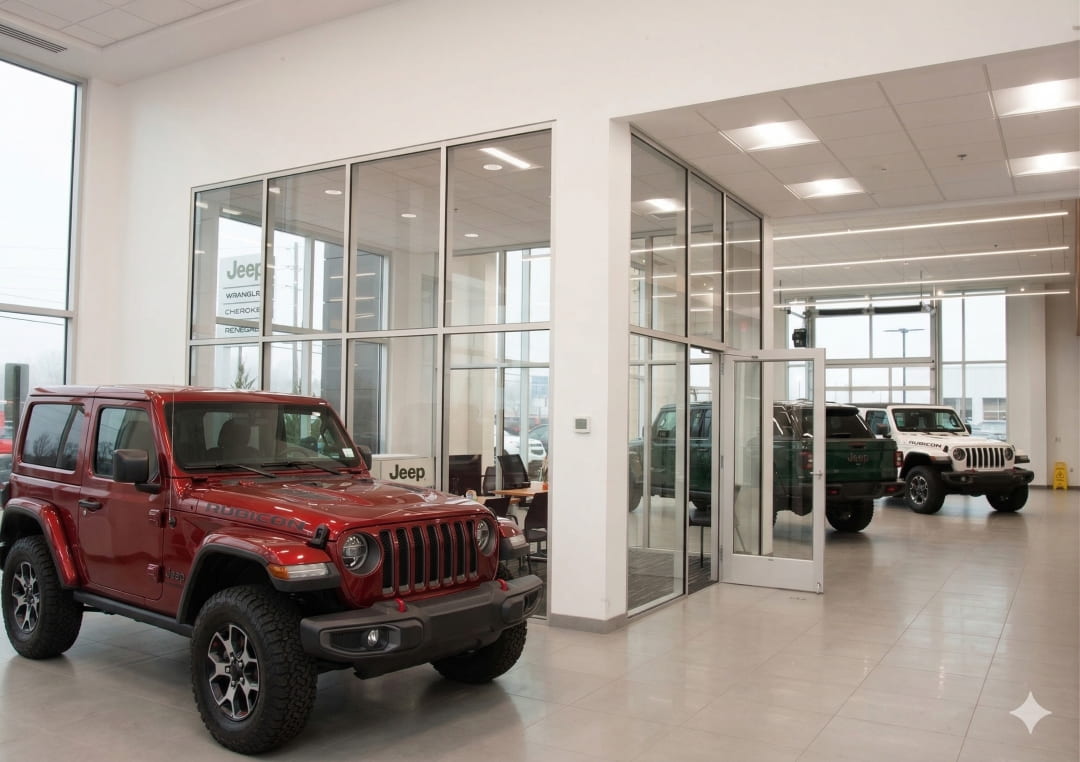
The office must be permanently enclosed and actively used for business. The business must include a designated display area, and that area cannot be a public street. An indoor garage alone is not sufficient.
Before you sign a lease, ask your local zoning authority if the business location is approved for dealership use through the local city/county government. That step helps prevent costly mistakes.
When the state checks the site, it expects these basics:
- A dedicated building.
- A lot for vehicles.
- A visible sign with the operating name.
- Records available during posted hours.
- A photograph showing the building, lot, and sign.
- A phone and email tied to the business location.
According to the Missouri Department of Revenue, regular business hours mean the dealership must be open for at least 20 hours each week, spread over at least four business days.
Total Cost Breakdown
Startup cost comes from the bond, policy, signs, lot prep, and fixes. Most new applicants spend more on making the location compliant than on the license itself, especially when signage, zoning adjustments, or lot setup need correction. Costs also vary based on credit (which affects bond pricing), lease terms, and how ready the site is before inspection.
Dealer Bond, Insurance, Fees
Missouri requires a bond for most retail and wholesale classes, and many businesses also need a current garage policy. Do not confuse the premium with the total bond amount. The bond acts as a backstop for harmed buyers and lienholders.
The table below reflects Missouri’s fee and coverage rules.
| Cost Item | What Missouri Expects | Practical Note |
| Missouri auto dealer bond | $50,000 surety bond in most cases | Cash cost is the premium |
| License fee | Up to $150 for a one-year motor vehicle class, prorated by month | Month of filing matters |
| Initial registration tag | $50, prorated after January | Extra tag fees are separate |
| Extra tag | $10.50 for a full year, prorated later | Sales level affects quantity |
| Garage policy | Required for many classes | One of the key types of insurance |
| Site photos and inspection | Required before approval | Site prep mistakes add cost |
Hidden Costs Most First-Time Dealers Miss
Sign fixes, lease rewrites, zoning problems, and bad uploads slow more files than review. Personal credit also affects the bond premium.
A used lot that later wants new vehicles, RV units, or salvage cars in Missouri may need different records or coverage. Auto dealers should lock the model first and build the file second. If you plan to sell online, a dealership in Missouri still needs the same site rules.
The table below covers the hidden costs most first-timers miss.
| Hidden Cost | Why It Appears | Effect |
| Sign replacement | A temporary banner is not enough | Delays approval |
| Lease or zoning rewrite | Site use was not cleared early | Forces a new address or layout |
| Higher bond premium | Weak credit profile | Raises startup cash needs |
| Seminar time and fee | First-time applicants may need it | Slows the file |
| Reinspection | The lot, sign, or photos do not match | Adds waiting time |
| Record setup | Monthly reporting and inventory control | Easy to ignore until launch |
Step-by-Step: How to Apply for a Missouri Dealer License
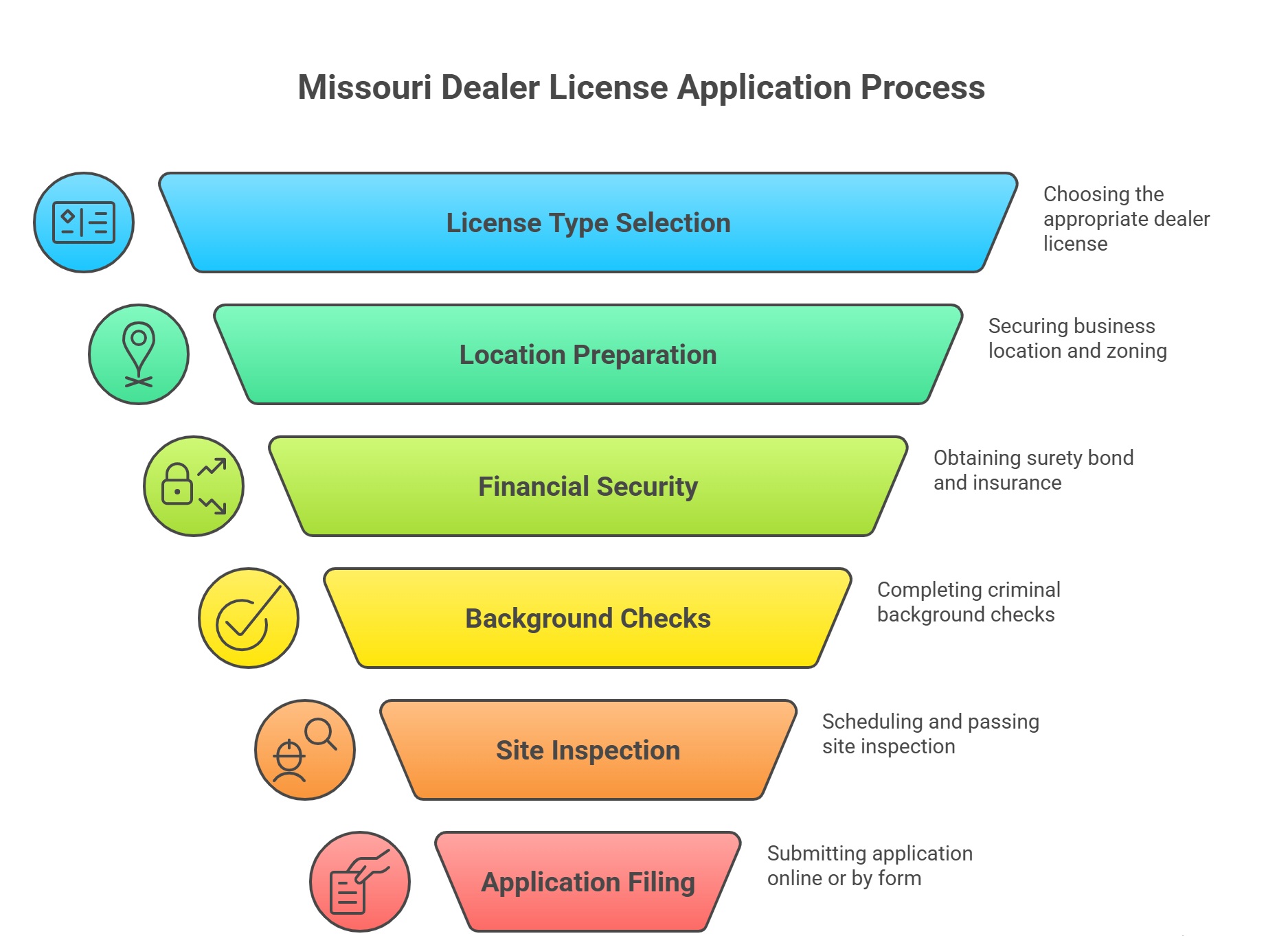
The license application process is not hard, but it punishes missing pieces. Incomplete documentation, mismatched names, or an unfinished site can stop a dealer application fast. The process includes choosing the appropriate class, preparing the lot, and making sure each owner is ready for the record check. To move faster, meet the following requirements:
- Register your business and gather the necessary documents.
- Pick the right license type from the types of dealer licenses Missouri offers.
- Secure the business location and confirm local zoning.
- Buy the surety bond and policy, and collect the site photo.
- Get the criminal background check for each owner through the Missouri Highway Patrol. Use the state Highway Patrol’s Missouri automated criminal history portal for the owner record search.
- Schedule the site check so an authorized law enforcement officer can certify Form 5748.
- Complete the online filing in MyDMV or fill out Form 4682.
- Review the dealer application, request Missouri dealer plates, and submit your application.
Timeline: How Long It Takes to Get Approved
Most delays come from record issues, site problems, bad photos, or a bond that does not match the owner’s name. That matters if you want to buy at auction quickly. Getting your Missouri file consistent is usually the slow part. Delays are costly because unsold cars at dealerships tie up cash.
The table below gives a realistic approval timeline.
| Stage | Typical Time | Delay Factors |
| Preparation | 1–3 weeks | Lease issues, sign not ready, zoning not cleared |
| Record check | 1–7 days | Out-of-state owners, record delays |
| Site-check scheduling | 3–14 days | Site not ready, hours not posted |
| Submission | 1 day | Missing signature or bad uploads |
| Review | 1–3 weeks | Bad bond, wrong fees |
| Final issue | A few days | Mailing or registration-number delays |
Fast-Track Tips to Get Approved Faster
Every name matches, every upload is clear, and the site already looks open for business. Use one checklist to ensure consistency and compliance, and keep the application moving under state regulations. Smart auto dealers submit once, and new auto dealers should monitor their application status. Here are some valuable tips:
- Match the bond, insurance policy, DBA, and business name on every form.
- Use a VIN decoder for screening vehicles, not as proof of ownership.
- Check the list of approved seminar providers early.
- Make sure the dealership is open for the state minimum hours.
- Keep one clean photo set and one clean ownership story.
- Submit a complete application once rather than multiple times. Check the application status once after submission.
After You Get Licensed: Renewals & Scaling Your Dealership
Renew on time, keep the bond and policy active, protect title records, hit the sales minimum, and scale inventory gradually so the dealership stays compliant while it grows. The Missouri Department of Revenue will still expect the same licensing requirements.
FAQ
How Many Dealer Plates Can a New Missouri Dealer Get at the Start?
A new licensee can receive one distinctive plate plus two extra tags at initial issuance. New applicants may also get up to three temporary tags valid for 30 days.
Do I Need a Minimum Number of Sales Each Year to Keep My License?
Yes. A motor vehicle dealer must reach eight sales in a full calendar year for renewal eligibility. Missouri uses a prorated minimum when the license covered only part of the year.
Does an Indoor Garage Count as a Required Display Area in Missouri?
No. The state says that the lot must not be a roadway, and an indoor garage by itself does not satisfy the display-area rule.
Can I Operate Under Another Dealer’s License Instead of Getting My Own?
No. If you are running your own auto business, holding stock, or selling as a separate vehicle dealer, you need your own approved license and location.
Do I Need a Separate License for Selling Motorcycles, Trailers, or RVs?
Usually, yes. Missouri ties the license to the operation and unit type. Powersport, trailer, RV, boat, and motor vehicle sales activity may require a different class or added authority.