Contents
A car being sold at auction is not automatically a bad sign. Many clean, mechanically sound vehicles go to auction for routine reasons: fleet rotation, lease returns, aging dealer inventory, or repossessions with no damage. It becomes a red flag only when the title is branded (salvage, rebuilt, flood), the seller offers limited disclosures, or the vehicle is sold strictly “as-is.” The key is checking its VIN history, title status, and condition report to understand whether the auction explains normal turnover or risk.
Why Cars End Up at Auctions (And When You Should Worry)
Cars are often moved through an auction to cut time and holding costs. Cars are sold at auction for speed and cash flow. Other reasons why cars move to such platforms include volume liquidation and simple auction sales.
Everyday Reasons a Good Car Might Be Sent to Auction
A lot of good vehicles are sent to an auction for speed, not because the car is broken. Some car dealerships route inventory to auction, and this helps clear vehicles that don’t fit the lot. If a trade-in won’t sell, dealers will send it to auction. That’s why some shoppers buy a car at auctions for more choice.
Everyday reasons cars are sent to auctions:
- Trade-ins that don’t match a dealer’s brand focus or trim mix.
- Fleet vehicles rotated out on schedule, even with solid maintenance.
- Rental car companies are clearing older units to refresh their car inventory.
- Pre-owned vehicles returned from leases that are clean but have higher mileage than retail buyers prefer.
- Aging inventory that sat past 60 or 90 days and needs to be sold quickly.
Situations That Should Push You to Investigate Further

Some paths to the auction are routine. Others hide legal or structural baggage. A seller might be offloading a problem, or the car could have paperwork complications.
The biggest “dig deeper” situations include:
- Salvage auctions listings, especially when the title story is vague.
- Banks sell repossessed vehicles to close files.
- Vehicles at auction showing fresh paint, uneven panel gaps, or odd weld marks.
- Notes about sold as-is with no arbitration, returns, or guarantees.
- Mentions of undisclosed liens or title delays that can block registration.
How the Type of Auction Affects the Risk Level
Not every auction is built the same. The car auction format, rules, and who can bid change what gets sold. For example, some auctions run special lanes for manufacturer buybacks, cars that were returned under warranty for recurring quirks, not always dangerous, but worth a closer look. Others group high-mileage commuter cars together, which may still be in good mechanical condition if they were mostly highway-driven.
Dealer-Only vs Public Auctions: Key Differences for Buyers
Dealer auctions move volume fast, and events allow dealers to trade cars and rebalance car inventory. An automotive auction helps dealers protect car dealership profits because dealers use set checks before they bid. If you’re buying at auction without a dealer license, you must bring your own limits. Use the table below to compare:
| Feature | Dealer-Only Lanes | Public Lanes |
| Typical sellers | Car dealers, fleet accounts | Individuals, small lots, charities |
| Typical condition | More consistent grading | Wider spread, more surprises |
| Buyer support | More arbitration options | Fewer protections, more final sales |
| Pricing behavior | Wholesale-focused | Retail emotions can spike bids |
| Access | Requires dealer credentials | Open registration in many states |
How to Read an Auction Listing Like a Pro
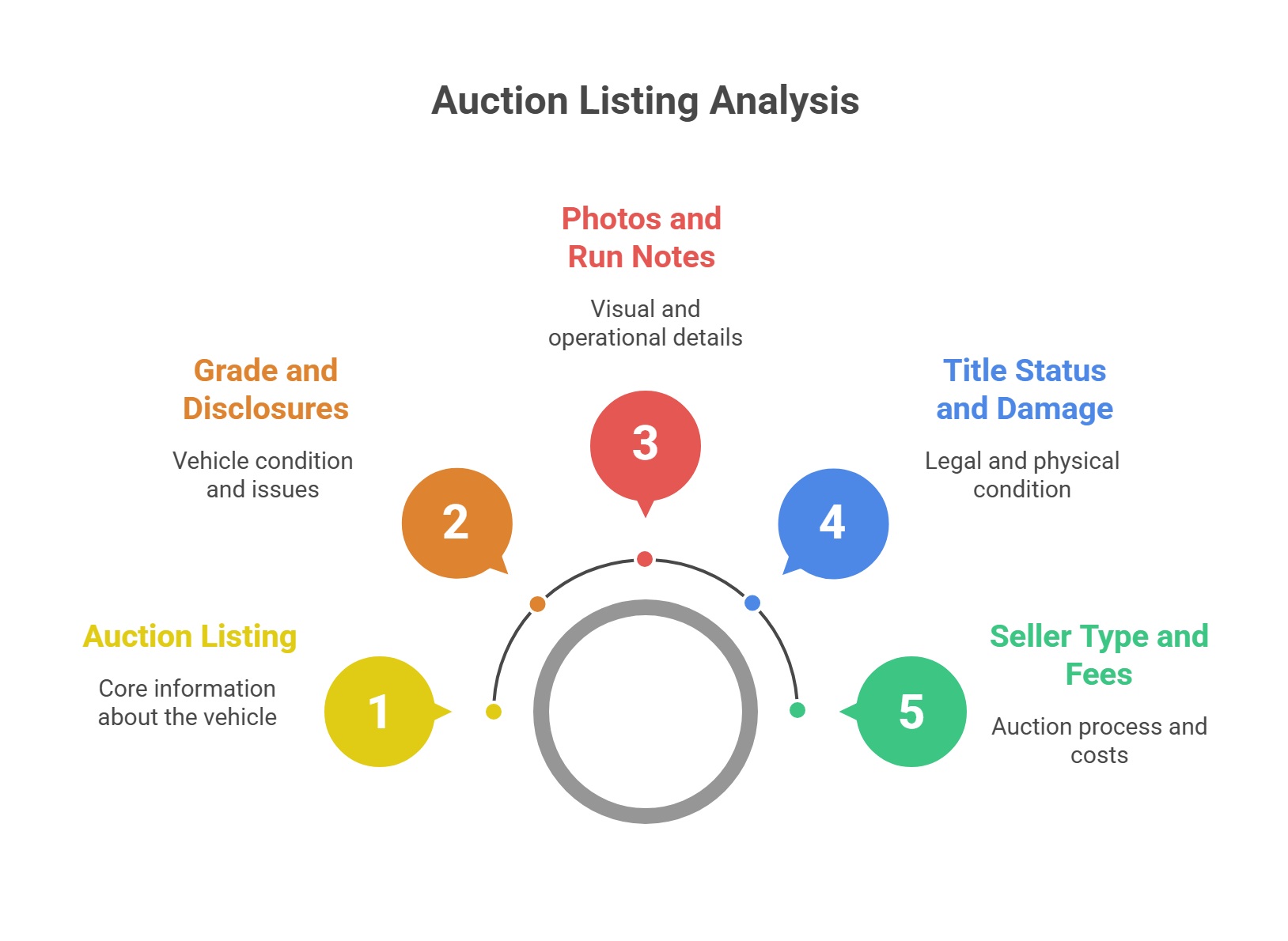
An auction listing is a compressed story. Start with grade and disclosures, then compare them to photos and run notes. Pay attention to title status, announced damage, and whether the vehicle came from online auto auctions, where physical inspection is not possible. Auctions provide enough detail to screen vehicles, but only if you read every line.
Before you see a car, focus on these listing clues:
- Title type, brand notes, and whether vehicles are sold with a clear transfer path.
- Odometer statement, including exempt rules and suspicious jumps.
- Announcements like “run and drive,” “starts,” or “no start” plus any smoke notes.
- Seller type: fleet, bank, or dealership, which hints at maintenance style.
- Fees, transport rules, and preview time so the auction process doesn’t surprise you.
How to Check a Car’s Title and Legal Status Before Buying
Before you bid, treat the title like a contract. A clean title is not the same as a clean past. Confirm status, ownership chain, and whether the car can be registered in your state. For example, some titles show long gaps between owners, which can signal the car sat unused for years, something you won’t see in the condition report. In other cases, a title might list “previously registered in another state,” which is normal, but worth double-checking if that state is known for floods or strict emissions programs. If mileage looks unusual, remember that federal law prohibits odometer tampering under 49 U.S.C. § 32703, so any inconsistency deserves a closer look. Even small details, such as mismatched name spellings or missing signatures, can delay registration.
What Auction History Means for the Title
Auction history often shows how often the car changed hands and why it moved. Multiple flips can be normal, but repeated “no sale” events may point to a problem that buyers spotted during the preview. Some unsold cars at auctions return with new disclosures. Others come back unchanged. Always cross-check title brands and odometer notes, then match them to vehicle history reports so you don’t inherit delays or legal surprises. The National Association of Insurance Commissioners also warns that cars with hidden flood or damage histories can re-enter the market through auctions, so reviewing title brands is essential
In wholesale data, branded-title units frequently sell for 20%-40% less than similar clean-title used cars. The figure depends on market demand.
How to Tell If You’re Overpaying for a Car Sold at Auction
Price discipline matters because competitive bidding can quickly reduce potential savings. Start with ACV (actual cash value). Then, back out the known fixes and risk allowance. Use a VIN decoder to confirm trim, engine, and options. Even small equipment differences move market value. When you set your max bid, build it from numbers, not hope.
A practical overpay check includes:
- Compare recent local retail listings to ACV-based pricing decisions for the same trim.
- Subtract reconditioning, taxes, fees, transport, and a buffer for unknowns.
- Account for the depreciation rate on that model, especially if it’s near a redesign.
- Avoid bidding wars when the same model runs back-to-back.
- Stop bidding if the price reaches retail levels without adequate protections.
How to Inspect an Auction Car for Hidden Mechanical or Structural Issues

A quick walkaround isn’t enough at a busy auction. Focus on structure, electrical health, and fluid condition.
Use this step-by-step inspection:
- Check gaps, glass dates, and underbody seams for signs of collision pulls.
- Scan for codes. Confirm readiness monitors (emissions system self-tests) and charging voltage.
- Look for oil sludge, coolant contamination, and transmission leaks.
- Test suspension play, tire wear patterns, and brake rotor condition.
- Verify the cooling system and HVAC.
Should You Buy an Auction Car or Choose a Dealer Vehicle?
Risk tolerance is what determines the choice between a dealer lot and an auction instead. Auctions can offer speed, but their units are usually “as shown.” Your risk tolerance determines whether an auction purchase or a dealer vehicle is the better choice. Use this comparison to decide:
| Factor | Auction Car | Dealer Car | Who This Option Fits |
| Price | Lower entry bids, but fees add up | Higher sticker, easier to negotiate | Budget buyers vs risk-averse buyers |
| Warranty | Rare, often none | More common, sometimes included | Buyers who want coverage |
| Inspection quality | Limited time, self-driven | More thorough, sometimes documented | Experienced self-inspectors vs buyers who prefer professional evaluation |
| Risk | Higher surprise potential | Lower surprise potential | Experienced buyer vs cautious buyer |
What to Expect During the First Year of Owning an Auction Car
Even when used cars bought at auction feel fine, the first year reveals deferred maintenance. Plan early checks, because prior owners may have skipped small services before they decided to sell. If you’re keeping the car, use a simple calendar and a small reserve.
Here’s a month-by-month timeline to stay ahead:
- Month 1: Initial repairs. Handle safety basics like tires, brakes, and lights.
- Month 3: Electrical audits. Check battery health, grounds, alternator output, and parasitic draw.
- Month 6: Fluid & suspension updates. Refresh key fluids, inspect bushings, and align the wheels.
- Month 12: Resale assessment. Review records, recheck leaks, and decide whether to hold or sell.
Owners often budget 5%-15% of the purchase price for first-year catch-up maintenance after an auction buy.
How Auction History Affects Insurance and Resale Value
Insurers care about title brands and how easy it is to value the car. Some insurance companies write coverage normally, while others limit comprehensive coverage on branded titles. Resale depends on documentation from the auto auction, because car enthusiasts judge how hard it will be to sell later. To mitigate such risks, auctions typically provide disclosures, and bidders adjust prices accordingly. Moreover, auctions attract bidders who punish vague disclosures. Use this table to predict impacts:
| Auction Clue | Insurance Impact | Resale Impact |
| Clean title, single owner | Standard rates | Best resale, easier to finance |
| Total-loss brand note | Limited coverage options | Lower buyer interest, bigger discounts |
| Repeated re-listings | More underwriting questions | Longer time to sell, lower offers |
| Missing service records | Possible value adjustment | Buyers demand proof, or they walk |
Key Takeaways
Auctions offer opportunities. However, you need to verify the basics and set limits before you bid.
Remember these points so you can make a safe decision:
- Confirm title brands and legal status early, and make sure the auction houses can produce documents.
- Treat mechanical warning signs (fresh paint, odd welds, warning lights) as deal-breaker thresholds unless priced to fix.
- Use ACV-based pricing decisions to set your cap, then subtract fees so you don’t chase a “cheap” car into an expensive one.
- Match auction type vs risk: dealer auctions tend to be more consistent than public lanes, while online auctions introduce additional risk due to the lack of physical inspection.
- An auction vehicle is a good opportunity when the numbers work, the disclosures match, and the car has clear keys and ownership.
- Decode the VIN, inspect in person, and verify the title chain.
- Walk away if damage crosses your salvage threshold. If the seller can’t answer basic questions, this is an obvious red flag.
FAQ
Why Might a Car Go to Auction After Failing Emissions?
A failed emissions test can make a seller skip retail listings. Sometimes, dealers send cars to auction to recover value.
When Do Seasonal Factors Make Certain Cars More Likely to Go to Auction?
Seasonal swings push sellers to time car inventory. Convertibles and sports cars often appear after summer, while 4x4s show up after winter. Companies use auctions to align their vehicle inventory with seasonal demand and avoid stale stock.
Why Do Some Auctions Have a Huge Number of Nearly Identical Cars?
Large fleets cycle vehicles in batches, and auctions can offer a clean way to liquidate in volume. Fleet vehicles from rental firms hit the same auction run, creating many of one model with similar mileage, color, and options in a single day.
Can a Car With Frame Damage Pass Through an Auction Without Disclosure?
Yes, frame damage can slip through if it wasn’t detected, or if the seller’s disclosure is limited by lane rules. Always inspect the underbody and check measurements.
What Does It Mean if a Car Looks Clean but Has Unusually Low Auction Bids?
Low bids can signal hidden issues. This may be odor, flood clues, or title problems. Verify condition, history, and pricing before you bid.