Contents
The best month to buy a used car at auction is usually February, while the best overall period is January through March. Auction inventories are typically larger after year-end processing, and fewer buyers are actively bidding, which can lead to lower winning bids and better value.
Why Auction Timing Works Differently Than Dealer Timing
A dealership wants steady traffic, test drives, and a salesperson who can protect margin. Auctions move faster. The hammer price reacts to who is online, similar lots, and whether the seller wants to move inventory. Dealer incentives, quota pressure, and month-end tactics matter less than lane supply. That is why the best time to buy a used vehicle at auction often occurs before the retail calendar turns.
Use auction time as a market signal, not a magic rule:
- More salvage supply can mean a lower price, but only if bidder density stays thin.
- Fresh photos, keys, and run-and-drive notes attract car buyers quickly.
- Online auctions let you use a wider geography than local dealerships.
What Drives Auction Car Prices Up and Down?
The cheapest cities to buy a car vary by season, but auction values move as buyers assess risk. A used car with light cosmetic damage can outperform a cleaner-looking lot if the title is stronger. In this case, SCA is a platform that helps because buyers can use filters across clean, repairable, salvage, trucks, SUVs, motorcycles, boats, and more. That range helps you avoid chasing one crowded listing.
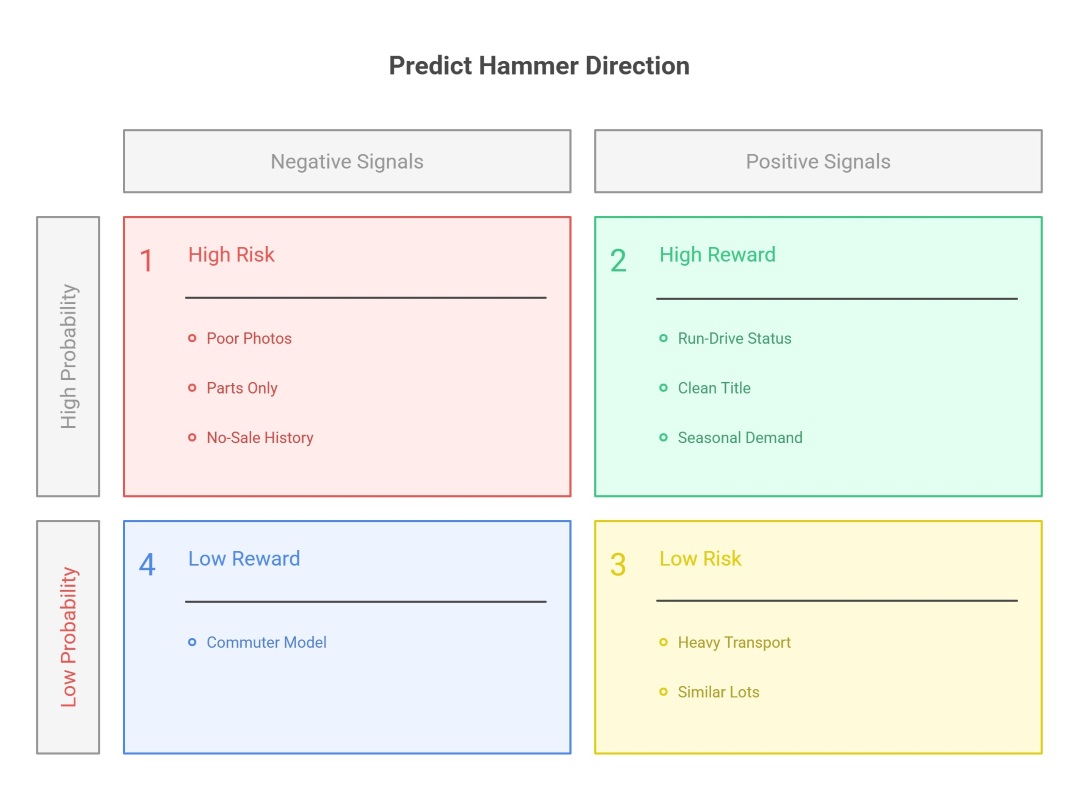
Before bidding, use these signals to estimate the hammer direction:
- More similar lots listed the same week: bids drop.
- Run-and-drive status with keys: up.
- Clean or rebuildable title instead of parts-only: up.
- Poor photos or missing interior shots: down.
- Heavy transport distance from your location: down.
- Popular commuter model early in the year: up slightly.
- Luxury, diesel, or all-wheel-drive demand in fall and winter: up.
- Prior no-sale or relist history: down.
The Auction Buyer’s Seasonal Price Calendar
The best time to buy a second-hand car is not one date. To buy a car at auction, compare supply, weather, taxes, and repair timing across the year, then bid when the lot type has its best buying window. Auction activity, inventory mix, and bidder behavior shift throughout the year, creating periods when certain vehicle categories become easier to buy below market value. Seasonal changes affect everything from salvage supply to lease-return volume.
January – March: High Volume, Low Competition
This is often a strong time to bid on used vehicles with repairable damage. Return volume rises after fleets, insurers, and lenders process year-end files. Many car shoppers wait for tax refunds. That gap can create used car deals for disciplined bidders.
Use this quarter if your goal is value, not speed:
- Start your search in early January for older commuter lots.
- Watch the last days of March for end-of-quarter seller pressure.
- Use saved searches to compare similar lots across states.
- Avoid bidding up common sedans.
April – June: Peak Demand, Narrow Opportunity
Spring is more competitive because retail demand increases. Families replace aging vehicles, shoppers need transport, and dealerships are eager to restock. The best opportunities may still appear, but you need tighter limits. Avoid chasing a deal on a used car because the first bid looks low.
Use spring with a strict ceiling:
- Treat April as a comparison period, not impulse season.
- Expect price drops to be limited on clean runners.
- Look for hail units after severe weather clusters.
- Use inspection reports before assuming cosmetic repair is simple.
- Avoid bidding wars on small SUVs and fuel-efficient sedans.
July – September: The Specialist’s Quarter
Summer tends to favor niche buyers. Convertibles, motorcycles, classics, and storm lots move differently. A convertible may draw attention before July, then soften later. A good weekday sale often appears after major travel periods.
Use summer only when you can evaluate risk fast:
- Look for a lower price on seasonal toys after demand peaks.
- Compare repair labor before you bid on hail or glass damage.
- Use shipping quotes early, because carrier demand can climb.
- Watch Labor Day listings for distracted competition.
October – December: High Volume, High Risk
October through December can be strong, but not for everyone. Insurers release inventory, lenders close files, and sellers want fewer stored lots before winter. Black Friday and other retail themes can distract beginners. Remember that a rushed purchase could erase savings.
Use timing carefully in the late year to get value:
- Focus on unsold relists with stable photos and clear notes.
- Review vehicle history before assuming a clean-looking car is safe.
- Avoid flood lots from recent storms without title research.
- Use a mechanic for high-value engines or hybrid systems.
- Keep cash available for fees, storage, transport, and registration.
Holiday Weekends and Auction Buying Windows
Memorial Day, Presidents’ Day, and major holidays can reduce live attention as bidders travel or focus on family plans. SCA is useful here because you can use watchlists, saved searches, and online bidding from anywhere.
The best possible deal often appears before or after the holiday, not during peak retail ads. Use the quiet window to buy a used car only when the photos, title, and fees already support the bid.
The National Safety Council estimated 393 U.S. road fatalities for the 2026 Memorial Day period and 424 for the 2025 Labor Day period, which helps explain why post-holiday collision inventory can increase.
Which Damage Types Have the Best Seasonal Timing?

Used car damage timing follows weather, travel, and repair-shop capacity. Hail-damaged cars often appear after regional storms, but the strong value may come weeks later, once duplicate lots crowd the lane. Use seasonality, then verify title, parts, and paint access. The table shows how a used car buyer can read cycles without overpaying:
| Damage Type | Peak Inventory Season | Best Buying Window | Typical Repair-to-Value Profile | Primary Title Risk | Recommended Buyer Profile |
| Hail | May-August | 3–6 weeks after major storms | Strong when glass is intact, and panels are reusable | Salvage branding after high estimate | DIY body buyer |
| Front-end collision | Winter and post-holiday | January–March | Good if frame rails and cooling stack are known | Airbag and structural notes | Experienced rebuilder |
| Rear-end collision | Year-round | Slow weekday lanes | Often strong when the trunk floor is clean | Hidden frame pull | Parts-savvy buyer |
| Flood | August-November | After title review, not the first listing | Weak unless a parts-only plan exists | Flood title disclosure gaps | Advanced electrical buyer |
| Theft recovery | Year-round | After relist or no-sale | Good when missing parts are listed | Recovered theft brand | Mechanic or recycler |
| Mechanical damage | Summer heat and winter cold | Off-season for that model | Strong if the diagnosis is confirmed | Odometer or lemon history | Diagnostic specialist |
The National Oceanic and Atmospheric Administration’s (NOAA) laboratory reports that the “hail alley” area of Nebraska, Colorado, and Wyoming averages seven to nine hail days per year.
How Do Flood and Storm Damage Lots Follow Hurricane Season?
Storm lots lag the event. Tow yards, insurers, adjusters, and auctions need time to process claims. The first wave can be expensive because everyone is watching the market.
The better window typically appears weeks later, when the inventory surge meets caution. Use title brands, waterline photos, odor notes, module costs, and state paperwork before taking a storm vehicle.
NOAA lists the Atlantic hurricane season as June 1 through November 30, so flood-related auction supply often trails late-summer and fall storms.
How to Calculate Whether the Timing Is a Deal
Timing only matters if the total cost makes sense. Use a VIN decoder to confirm trim, engine, restraint systems, and factory equipment before comparing values. A cheap hammer can grow after fees, parts, towing, and registration. To find the best bid, use a simple cost stack every time.
How to calculate your total acquisition cost before bidding:
- Record the estimated fair market value for the same used car trim.
- Use the VIN, photos, and notes to list likely repairs.
- Add auction fees, buyer fees, storage, and document costs.
- Add transport from the yard to the shop, then shop to registration.
- Subtract resale risk for branded title, mileage, and missing keys.
- Set your maximum bid at the number that still leaves a margin.
Title Laws, Flood Risk and State Timing Considerations
Title processing time can affect deal quality. Some states process salvage paperwork quickly; others create long delays. Unsold cars at auctions may relist because the title is pending, the reserve is high, or buyers distrust the story.
Florida requires flood-damaged vehicles that meet statutory loss thresholds to receive a flood or salvage brand, while Texas applies specific disclosure requirements for certain flood-related title histories. California has strict procedures for converting salvage vehicles back to road use, including inspections and documentation requirements before registration. These differences can influence how quickly vehicles appear at auction.
Best Times to Buy New vs. Used Cars

New cars follow the retail rhythm, while used car prices follow supply. Car sales, trade-in flow, and times of the year matter. Dealerships use rebates, a new model cycle, and sales goals to hit targets; dealers are eager when old stock blocks arrive. Used auctions follow supply shocks, title flow, and rebuild math. Knowing when to shop in each market timing can make your car purchase smoother. Use this comparison because car-buying math matters:
| Buying Route | Best Timing | Why It Works | Buyer Advantage |
| New retail | End of model year | Dealers clear inventory before arrivals | More negotiation room |
| New retail | End-of-month or quarter close | Sales staff may need to meet sales goals | Possible discount |
| New retail | Black Friday or New Year’s Eve | Ad traffic is high, but managers chase targets | Bundled incentives |
| Certified pre-owned | After lease return peaks | CPO selection grows at dealerships | Warranty plus selection |
| Used auction | January-March | Supply is high, and fewer bidders show up | Better hammer control |
| Used auction | After regional storms | Damage supply rises quickly | Specialist value |
| Used auction | Late relists | Seller expectations may reset | Means more leverage |
SCA fits buyers who want auction access without a local dealer lane. Use its filters to compare the next used car by title, damage, location, make, and sale date, then bid by numbers.
Key Takeaways
- The best time to buy a used car at auction is usually January through March.
- Auction timing often beats a retail holiday because auction supply moves first.
- Compare title, damage, transport, and repair costs before bidding.
- A quiet day of the month can be better than a famous sale event.
- If you’re flexible, relists and off-season niches can save you thousands.
- Specific times matter less than disciplined math and title review.
The right time for used car buying is when supply rises, competition falls, and the total cost still leaves room after repairs.
FAQ
When Is Bidder Competition Lowest at Salvage Auctions?
Bidder competition is lowest on midweek morning sales in January and February, especially for ordinary commuter cars listed outside major metro areas and without fresh social-media attention.
Does the Make or Model Affect the Best Time to Buy It at Auction?
Yes. Trucks and SUVs are strongest before winter, convertibles soften after summer, and basic sedans are usually cheapest when tax-refund buyers have not entered the lane.
Are Auction Vehicles Cheaper Immediately After Lease Return Season Peaks?
Usually yes, but the cleanest gap opens two to four weeks after lease-return flow peaks, when repeat units appear, and dealers stop chasing every clean runner.
What Is the Best Time of the Week to Buy a Used Car?
The best day is Tuesday or Wednesday morning, when fewer retail-minded bidders are active and professional buyers are often focused on higher-volume commercial lanes.
Is It Better to Buy a Car at the Beginning or End of the Month?
For auctions, the beginning is better for selection, but the last few days can bring lower reserve behavior when sellers want to settle inventory before reporting closes.