Contents
Buying a donk car at an auction comes down to three things: making sure the title is clean, making sure the lift and wheel setup is safe and legal, and knowing the real cost before you bid. Check the suspension, brakes, wheels, and frame for signs of poor work, then add fees, transport, and expected repairs to set your true maximum bid. If something feels off, walk away.
What Is a Donk Car?
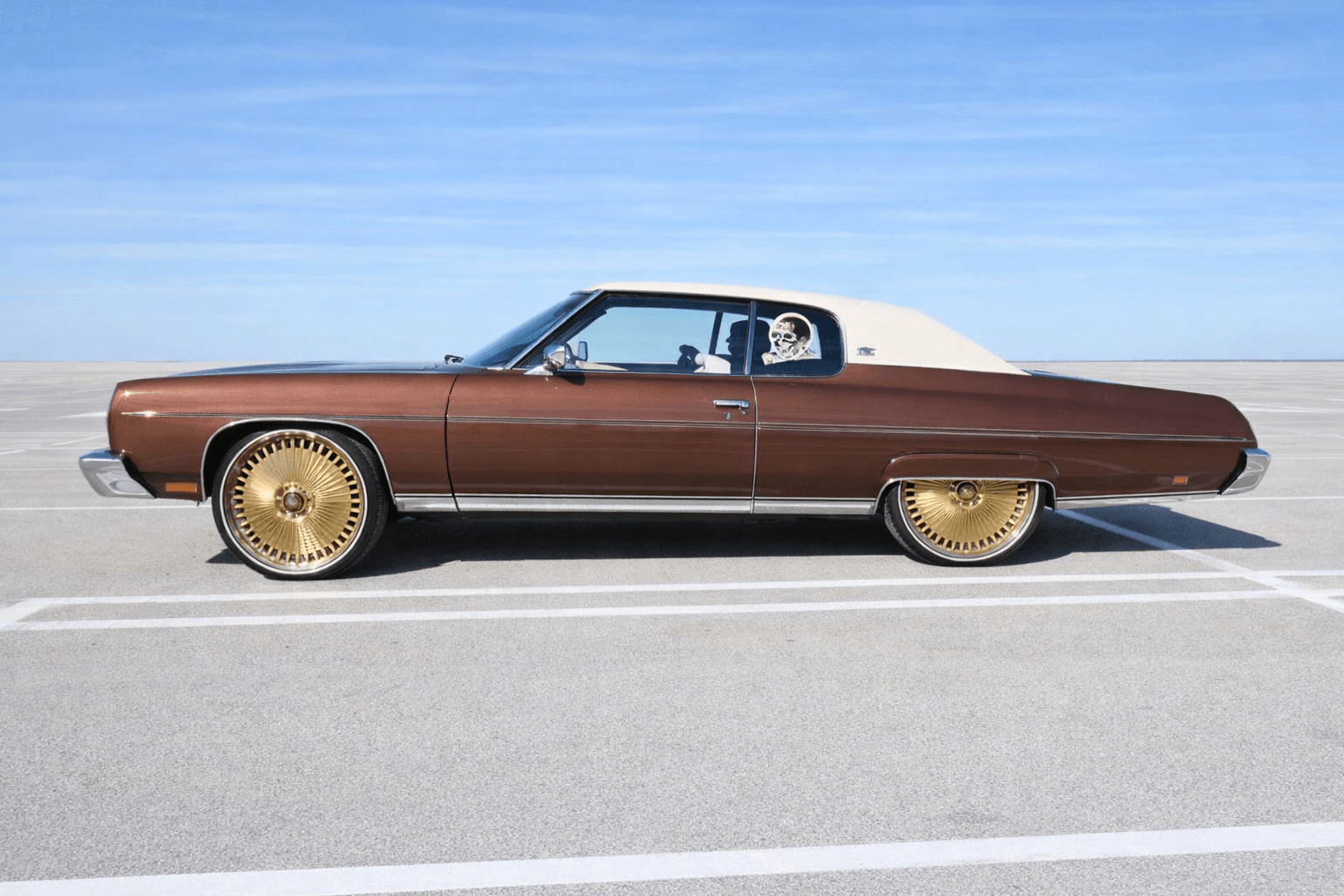
The definition of a donk car is a 1971-1976 Chevrolet big-body, often an Impala or Caprice, lifted on large wheels. The meaning is an original vehicle turned into a true donk and a big statement – an original donk look traced to the first donk days, now part of donk car culture, shaping the modern donk scene around an older car base.
How Auctions Classify Modified Vehicles
Auction sites rarely label “donk,” so these cars are grouped by title status. A custom car may be tagged “enhanced” or “reconditioned,” and labels control fees. In automotive terms, read lane comments for lifted suspension, wiring add-ons, and any car modification that can complicate registration. If it’s a modified car, expect extra scrutiny.
- Runs/drives, starts-only, or non-runner (affects towing and storage).
- Title type: clean, rebuilt, salvage, or bill of sale.
- Modification notes: modified suspension, brakes, lighting, and engine swap.
- Arbitration: as-is, limited return, or no disputes.
- Seller: dealer, insurance, repo, or private consignment.
Which Donk Models Are the Most Reliable and Popular?
Most people want a donk they can cruise, not a flashy, constant project. Because tall stance setups increase loads on hubs and steering, the suitable candidates are the best cars to restore with the best parts support. Among donk enthusiasts, Caprice or Impala platforms work because the look is right and parts are easy to find. If you want to build one, start with a straight shell and clean title; it protects resale and reduces legal stress.
| Base model | Why it’s popular | Reliability checks before bidding | Best use case |
| Chevrolet Caprice | Big-body proportions, easy lift fitment | Frame rust, steering play, brake lines | Street built with comfort |
| Chevrolet Impala | Icon profile and trim support | Rear axle noise, window motors | Show-ready donk car |
| Chevrolet Monte Carlo | Lighter body, easy to modify, strong community support | Body bushings, suspension sag, and electrical grounds | Budget-friendly starter donk |
How to Calculate the True Auction Cost
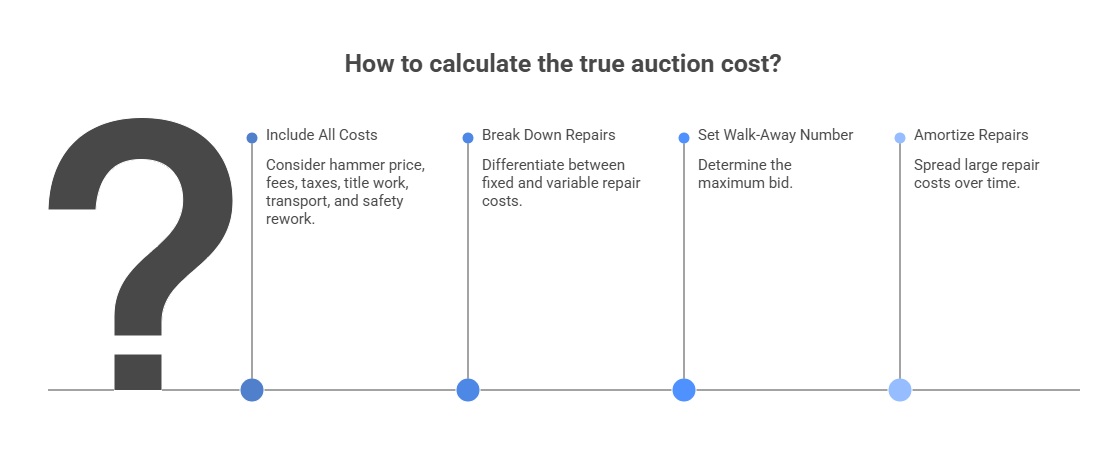
True auction cost is hammer price plus buyer fees, taxes, title work, and transport, then safety rework. A “cheap” donk car can jump once you price repairs. Additional tips for calculating:
- Break repairs into fixed vs variable costs: fixed (buyer fees, transport, taxes) rarely change; variable (labor, parts availability) can swing 30–60%.
- Calculate your “walk-away number”: subtract total projected cost from expected resale value to find the highest bid that still keeps you profitable or at least cost-neutral.
- Amortize big repairs over ownership: spreading expected repairs (brakes, alignment, lift corrections) over 12–18 months helps you understand whether the car remains within budget long-term.
Buyer fees commonly add about 5–12% to the winning bid.
Estimating ACV and ROI Before You Bid
Start with ACV for the stock car, then add value only for parts you can verify. Treat paint and rims as used components; workmanship varies. When you’re choosing between two cars, use the same worksheet and a risk buffer; that’s how you avoid overbidding. Also, consider wheels and tires as wear items.
| Pre-bid number | How to estimate | Conservative rule |
| Stock ACV | Local comps and recent sales | Use the lower end of pricing |
| Wheel package (32 inches) | Used market pricing | Value at 40–60% of retail |
| Labor to correct issues | Shop quote ranges | Assume 40–120 hours possible |
| Transport + pickup | Quote height/width first | Add a surcharge buffer |
| Resale target | Compare finished donk car sales | Don’t count “dream” prices |
Hidden Costs Unique to Donk Cars
A donk car changes geometry, and geometry creates bills. Larger wheels raise the center of gravity, so worn steering parts become a safety issue. Tire diameter changes can throw off the speedometer, and cheap spacers can cause vibration. Plan these donk costs before you bid; high risers can raise transport quotes.
- Oversized wheels: They stress studs and bearings; one cracked rim can derail your budget.
- Misaligned driveshaft: Wrong angles cause shudder and U-joint wear; a new shaft may be required.
- Brake upgrades: Big rims need more brake torque; budget calipers, rotors, and lines.
- Title fees: Rebuilt or out-of-state paperwork can require inspections and extra charges.
- Storage/late pick-up fees: After the free window, daily fees stack on any car.
- Surprise transport surcharges: Lift height and wide track can trigger “special equipment” rates.
- Insurance limitations: Some carriers cap coverage on custom parts or refuse certain builds.
Some insurers surcharge branded titles by roughly 20–40% or restrict full coverage.
How to Inspect a Donk Car at Auction (Even Remotely)
Inspect a car like a safety audit. Use underbody photos, start-up video, and an inspector to confirm structure, steering angles, and paperwork before you bid. Look closely at how the car sits, whether the wheels track evenly, and whether any lift components look improvised or mismatched. Pay attention to alignment, brake behavior in the video, and signs of frame stress around mounting points. Even remotely, a careful visual review can reveal build shortcuts, missing reinforcement, or geometry issues.
What a VIN Report Reveals
A VIN report is a fast filter for hidden history. Run the VIN decoder and match it to the listing photos on the dash and door label. Look for salvage branding, flood records, or repeated auctions. If it started as a Chevy Impala or a Chevy Caprice, confirm the trim and engine so inspections don’t surprise you later. A report can’t prove build quality, but it can reveal risk.
- Title brands and dates (salvage, rebuilt, flood, theft).
- Odometer flags and mileage inconsistencies.
- Prior auction entries and sale frequency.
- State-to-state moves that may signal strict inspections.
- Lien or export notes that complicate transfer.
Identifying Unsafe or Poorly Installed Modifications
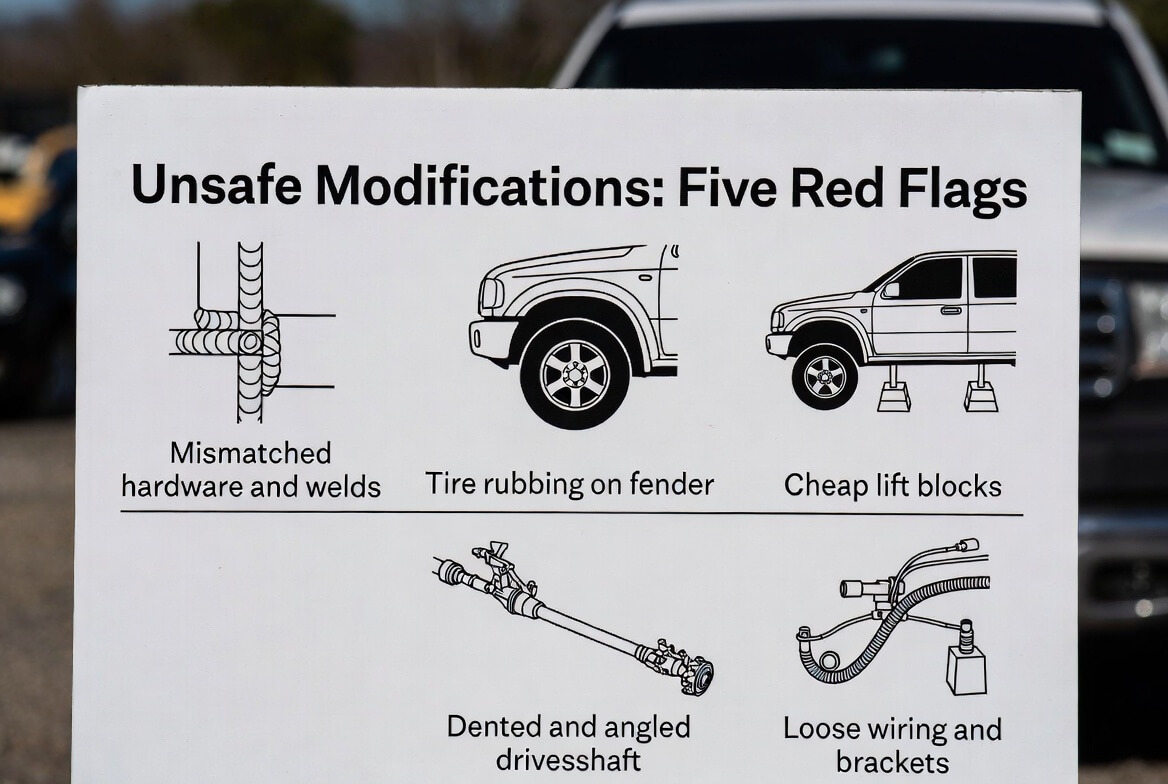
A safe car build looks consistent: matching bolts, clean welds, and no crushed brake lines. Check the wheel wells for fresh rubbing, and look behind the front bumper for hacked brackets or loose wiring. Once it’s donked, if you see low-profile tires stretched on massive wheels, expect a harsher ride and more joint wear.
Poor handling usually comes from bad alignment and cheap lift blocks. Correct builds include proper steering angles, brake-hose length, and hardware that’s sized for the load. Ask for a slow-turn video so you can hear tire contact, clicking joints, or grinding.
Changing the overall tire diameter can shift effective gearing by about 10–15%.
Cost vs Condition vs Legal Risk Comparison
A donk is more than appearance; it’s a high-load system. Use this table to weigh the condition against legal and repair risk when you can’t test drive the vehicle. Keep safety items “must-fix,” because shortcuts get expensive.
| Component | Safe Build Indicators | Unsafe Build Red Flags | Repair Cost Impact |
| Brakes | Larger rotors, quality pads, firm pedal | Stock brakes with big wheels, soft pedal | Medium to high |
| Driveshaft | Correct pinion angle, no vibration | Clunks, dents, leaking yoke | Medium |
| Frame | Straight rails, treated rust, clean mounts | Cracks, patched rot, bent crossmember | High |
| Suspension | Matched parts, aligned, quality bushings | Stacked spacers, bent arms, odd wear | Medium to high |
| Wheels | True spin, proper studs, no cracks | Wobble, spacer stacks, stripped lugs | Medium |
Understanding Lift Laws & Legal Requirements
Lift rules are local, and auctions won’t refund you for tickets. Many areas regulate bumper/headlight height, tire coverage, and how far wheels stick out. These limits often reference federal baselines from the Federal Motor Vehicle Safety Standards (FMVSS), which define requirements for lighting, reflectors, bumper height, and brake performance. Even donk builds can fail inspection if lights, reflectors, or mud flaps are missing. Paperwork is just as important: verify seller identity, matching names, and signatures to avoid title jumping. Unlike low-riders, builds get extra attention. If you plan on driving such a car daily, check noise and tint limits too.
- Bumper/headlight height limits and required ground clearance.
- Fender coverage rules for large tires and offset wheels.
- Speedometer accuracy expectations after wheel changes.
- Lighting requirements (reflectors, signals, and brake lamps).
- Emissions checks after an engine swap.
Custom Donk Safety Standards No One Talks About
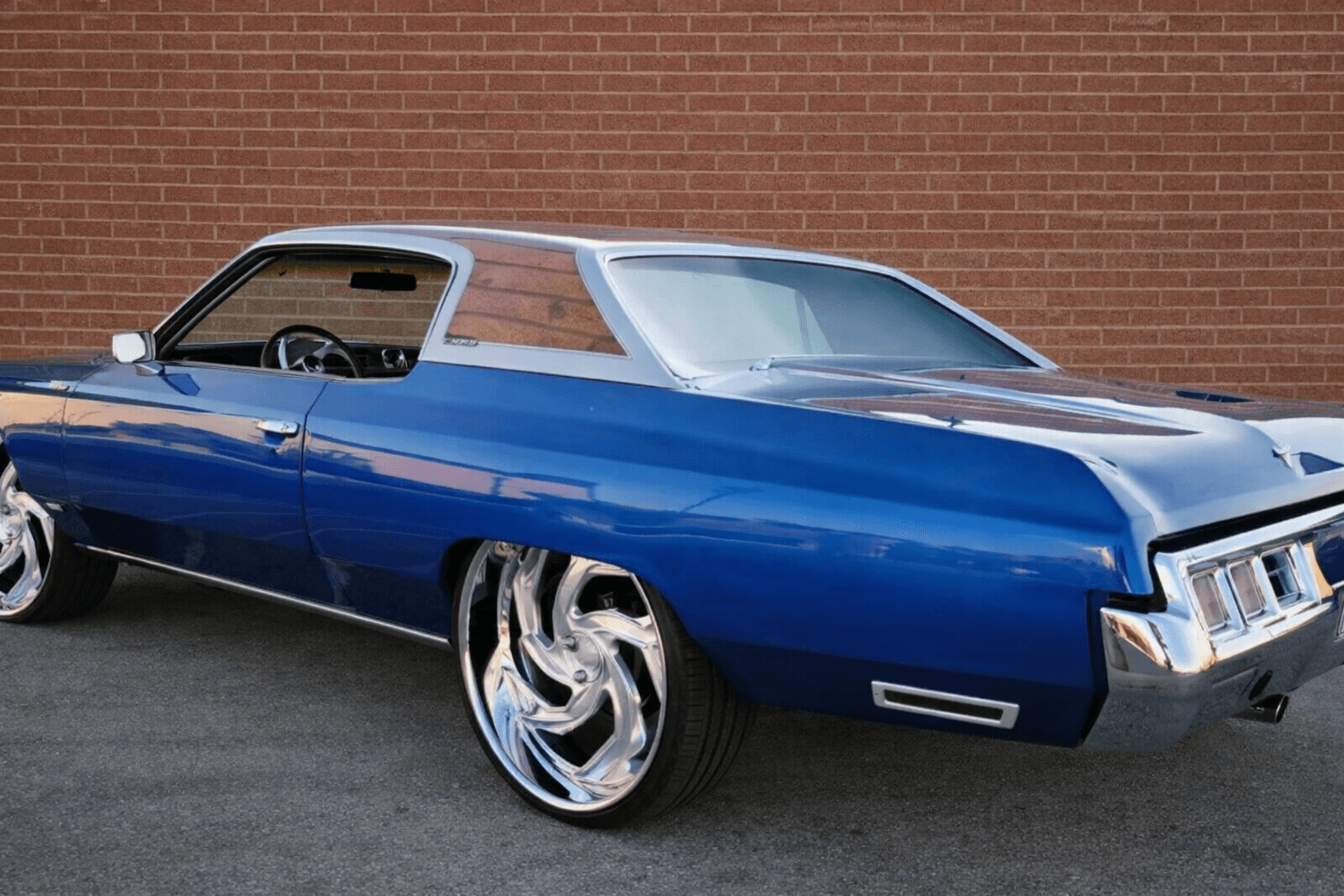
Some builds pass inspection yet still feel sketchy. The best shops document the setup for customization and repeatable car builds. When buying a reconditioned car, ask for alignment specs, torque notes, and proof of hub service. Safety research from the Insurance Institute for Highway Safety (IIHS) shows that extra height and weight can change how a vehicle behaves in quick stops or emergency maneuvers, which makes proper geometry and hardware even more important on donk builds. This helps you spot a setup that holds value instead of problems.
- Verify hub-centric fit and correct lug torque; donking loosens hardware when it’s wrong.
- Confirm corrected caster/camber and steering travel so tires don’t bind.
- Check brake bias after upgrades so the car doesn’t dive or pull.
- Look for heat in hubs after a short drive; heat often points to bearing issues.
- Demand receipts and dates for key parts; it protects resale.
Should You Buy at Auction or From a Private Builder?
If you’re choosing between a cheaper auction donk car and a professionally built private donk, compare repair hours and resale value. The auction route can save cash, but the “deal” is often offset by redo labor.
An unfinished auction donk can need 40–120 hours for brakes, steering, wiring, and driveline angles. Costs rise when parts are associated with donk shortcuts, even on Impala or Caprice builds.
A private seller’s professionally built donk is closer to a pre-built package. You can road-test and check for vibration. Documentation – receipts and alignment sheets – supports resale and lowers risk.
If you care about driving a donk without surprises, buy the documented build. If you want to make a donk and enjoy the process, buy the auction base and budget for safety first.
Summary
- Know the build: a donk is a lifted classic Chevy; lift height and big wheels change safety, handling, and legality.
- Set a true max bid: add buyer fees, transport, suspension/wheel fixes, and title costs to the hammer price.
- Check build safety: confirm frame integrity, driveshaft angle, brake upgrades, and proper lift-kit installation.
- Verify legality: review title status, VIN history, and state lift laws to ensure registration and insurance eligibility.
- Compare build sources: auction donks cost less upfront but often require more repair time and parts.
- Expect delays: transport, inspection, emissions, and repairs usually make the car road-ready in 30–90 days.
- Watch for red flags: rapid bid jumps, unclear modification details, or mileage issues often signal high-risk vehicles.
FAQ
What Factors Determine Whether a Car Is a “Show Donk” or a “Race Donk”?
Show builds focus on finish, while donk racing builds focus on stability and speed for racing events. Here are more factors to consider:
– Paint, interior detail, and stance at car shows.
– Brake capacity and cooling for repeated stops.
– Engine setup and horsepower goals for acceleration.
– Suspension geometry that improves traction at launch.
– Safety gear and consistency for high-performance use.
– Documentation that supports value in the car world.
How Do Engine Swaps Affect Maintenance Expectations for Donks?
Swaps can simplify or complicate ownership. Maintenance depends on wiring quality, cooling capacity, and whether the powertrain and sensors match the chassis so the vehicle runs reliably.
Why Are Some Donks Overpriced at Car Auctions?
Some listings sell the look, not the workmanship, so bidders pay for paint and big wheels while ignoring safety.
– Internet-famous builds that spark bidding wars.
– Trim condition unclear, even with clean photos.
– Short inspection windows that push impulse bids.
– Hidden title issues and missing receipts.
Are Donks with Salvage Titles Harder to Insure?
Often, yes. A salvage-branded car may face coverage limits for custom parts, and some insurers require inspections or exclude certain modifications, especially with oversized wheels.
Are Donks More Likely to Have Frame Damage?
They can be. Lifting stress can expose rust and cracks, and taller setups raise the center of gravity. Inspect rails, mounts, and repair patches carefully before buying.