Contents
To clear a salvage title in North Carolina, you must repair the vehicle to roadworthy condition, gather receipts for all major parts, and pass the NC License & Theft Bureau salvage inspection. Once the inspector verifies the VIN, repairs, and documentation, you submit the approval form and required DMV paperwork to receive a rebuilt title, which allows the vehicle to be legally registered, insured, and driven in NC.
What Does a Salvage Title Mean in North Carolina?
In North Carolina, a salvage title means the vehicle was damaged enough. As a result, the damage triggered a branded title. The title indicates the car needs verification. This status often follows a serious accident, theft recovery, or flood damage. A salvage vehicle may still be repaired and made safe. However, the paperwork must catch up. For shoppers comparing salvage cars in North Carolina, budget time for inspections.
- A salvage brand can lower the value compared with a clean title vehicle.
- A salvage record can limit financing and what insurance companies will offer.
- An authorized person should inspect the vehicle before you can get plates and drive.
The NC Total Loss Threshold Explained Simply
North Carolina law uses a 75% rule to decide when damage becomes salvageable for vehicles. The repair estimate is compared to fair market value, and once it crosses the line, the title gets branded. Search “salvage title vehicles in North Carolina” or “title vehicles in North Carolina” to see the same trigger. Sometimes the car is declared a total loss while it still runs, because it can be a total loss, according to an insurance estimate.
| Scenario | What gets compared | What triggers salvage | Quick example | Owner takeaway |
| 0–6 model years | Parts + labor vs fair market value | Repairs exceed 75% | Front clip + airbags | Branding stays on titles |
| Over 6 model years | Repairs (excluding airbags) vs fair market value | Repairs exceed 75% | Older car with SRS off | Airbag line changes total |
| Settlement method | Repair bills + residual value vs ACV | Sum reaches 75% | High parts prices | Explains a loss by an insurance company |
| Theft recovery | Repair estimate vs value | Missing parts push it over | Stripped interior | Anti-theft focus |
| Flood category | Water intrusion | Classified when severe | Wet modules | Electrical risk |
| Junk category | Not operable | Not titlable | Crushed shell | No plates |
North Carolina’s branded-title statute uses a 75% of fair market value threshold in common collision cases.
Should You Clear a Salvage Title? (Repair vs Sell vs Cut Losses)
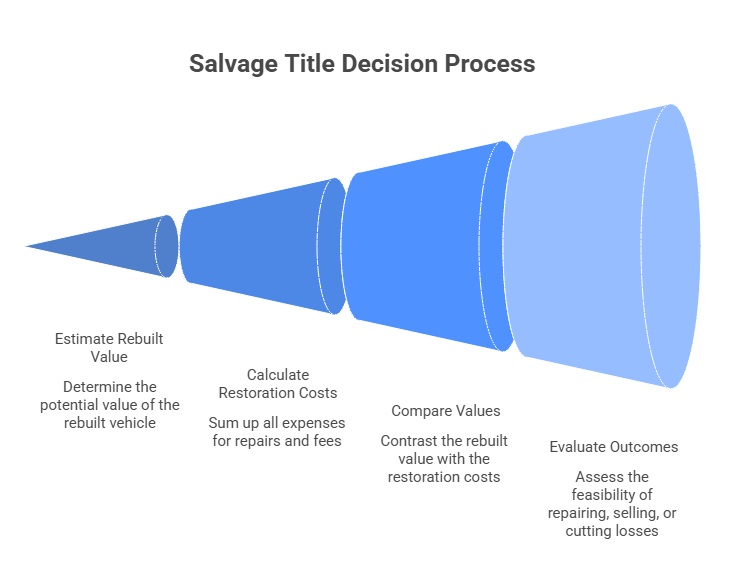
If you’re deciding whether to clear a salvage title, use math, not hope. If you’re looking to get it back on the road, price the project first. Start with the value of rebuilt title vehicles in your local market, then subtract every cost you’ll pay to restore the vehicle. Include parts, towing, and the inspection fee. Compare your total to the price of a similar used car.
Now compare three outcomes:
- Repair and rebuild: Works when value beats spend, and the car stays roadworthy.
- Sell as-is: Works when the salvage title vehicle still has buyer demand.
- Cut losses: Works when you’re upside down, or the structure is questionable.
Set a “do not exceed” number and stick to it. If the gap is tight, bring in a trusted mechanic for a thorough inspection before you buy the next big part. Also, call around early, because many insurance companies won’t quote full coverage on vehicles with salvage titles until the rebuilt paperwork is done, especially on vehicles with salvage titles.
Market reports often show cars with salvage titles selling 20%–40% below comparable clean title listings, depending on damage type.
What Documents Do You Need to Clear a Salvage Title in North Carolina?
The state is strict because title vehicles can be used to hide theft and fraud. At the local DMV, missing proof causes delays, so look for gaps before your appointment. The inspection process starts with organized paperwork. For reference, North Carolina’s bonded-vehicle guidelines from NCDOT provide the rules that inspectors follow during documentation review.
Checklist:
- Parts receipts (OEM/aftermarket): Itemize major parts with seller name, date, and price.
- Salvage title: Bring the original salvage title car document; getting a salvage title cleared starts with proof of ownership.
- Repair photos: Show before, during, and after images of the same repair areas.
- VIN verification: Provide a VIN check document. It should match the vehicle.
- NC official forms (MVR-55, MVR-92H, etc.): Submit completed forms. Provide required signatures and notary.
- Seller receipts for major components: Document engines, transmissions, doors, and airbag modules with seller info.
- Airbag/SRS documentation: Prove the SRS was restored and no warning lights remain.
- Lienholder authorization (if loan exists): Provide written approval or a lien release.
Step-by-Step: How to Clear a Salvage Title in North Carolina
Do the work in order. Keep all the paperwork clean. You need to obtain a rebuilt title without repeat visits. The goal is simple: prove that the repairs are complete, the parts are legitimate, and the vehicle meets NC safety requirements. When your documents are organized and the car is easy for the inspector to evaluate, the rebuilt title is issued much faster.
Step 1: Document Every Repair
Photograph damage and repairs. Keep every invoice. Clear records that prove the vehicle has been repaired with legitimate parts.
Step 2: Perform Repairs That Meet NC Safety & Structural Standards
Repair the vehicle. The structure, steering, brakes, lights, and SRS should be correct. The vehicle must be roadworthy, not just running.
Step 3: Schedule the NC Salvage Inspection
Contact the North Carolina Division of Motor Vehicles. Schedule a salvage inspection with the License & Theft Bureau. Bring the car, ID, and your receipts.
Step 4: Submit NC DMV Title Application for a Rebuilt Title
After you pass, submit your packet so that the local authorities can issue a rebuilt title for a car with a rebuilt title. That paperwork becomes your new title.
Technical Requirements for Passing NC Salvage Inspection
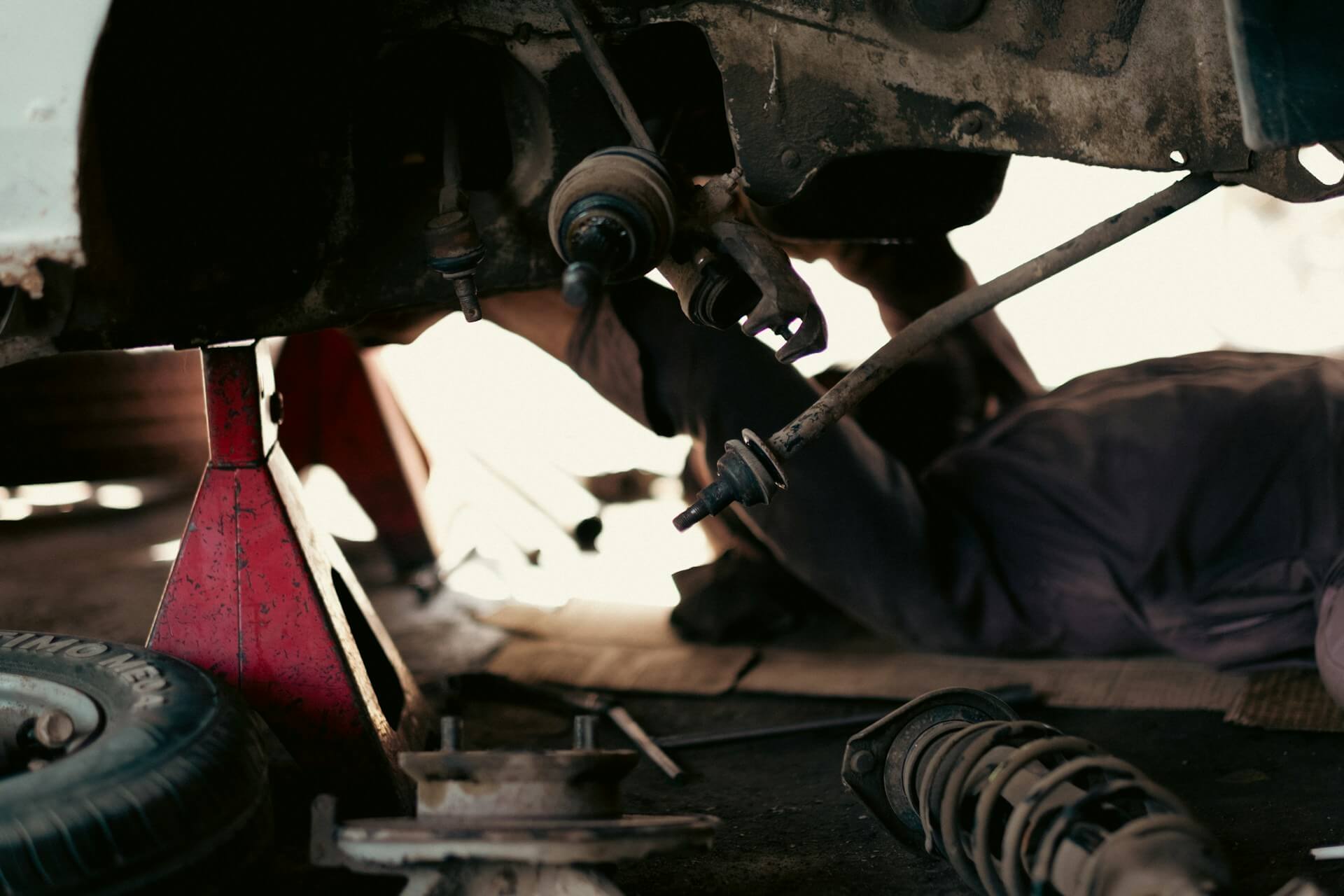
The inspection is mainly anti-theft plus safety checks. Confirm that the VIN matches, parts are traceable, and repairs aren’t unsafe.
- Make sure VIN plates and labels are present. They cannot be tampered and should match the paperwork.
- Check whether airbags, seatbelts, and SRS components are installed.
- Frame/unibody repairs should be straight. They cannot be cracked and must be properly welded, following industry standards such as the I-CAR structural repair guidelines.
- Brakes, steering, suspension, tires, lights, horn, and wipers should work.
- Major components should match receipts and seller documentation.
- Check for leaks or loose wiring that would fail a vehicle inspection.
How Much Does It Cost to Clear a Salvage Title in NC?
Fees are predictable, while repair expenses depend on the damage. Plan a cushion for calibrations.
| Cost item | Typical amount | Notes |
| Branding fee | $25.50 | Fee for a certificate |
| Certificate of title fee | $66.75 | Common title fee amount |
| License & theft inspection | Varies | Ask when you book |
| Safety/emissions inspection | $13.60+ | Varies by county |
| Alignment/calibration | $100–$600 | Common after front-end work |
Collision repair data often shows hidden damage after impacts, especially when airbags deploy.
Insurance, Resale Value & Ownership After You Get a Rebuilt Title
Once approved, you can shop for coverage, but insuring a car after a title brand is different. Several insurance companies start with liability insurance and ask for photos and receipts. If you need to insure a car with a salvage title, keep the rebuilt salvage title paperwork on file. In this case, you can get insurance, like a basic policy. After that, insurers may review the vehicle more closely than usual, since they want to confirm the quality of repairs and understand any limits they will place on coverage. Rebuilt cars often require extra documentation during claims, and some companies adjust payouts based on the vehicle’s branded status.
What Happens If the DMV Rejects Your Rebuilt Title Application?
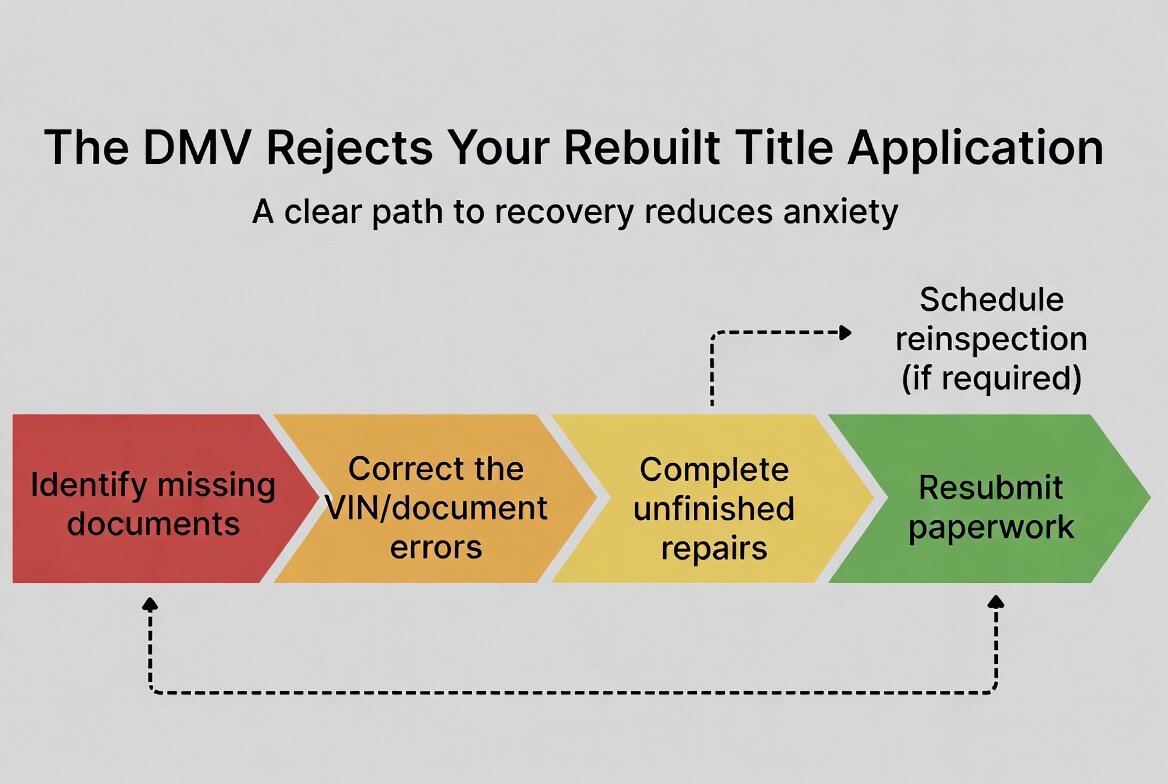
Most rejections are fixable. If you’re rejected, get the reason in writing. Then, correct it and resubmit. If the car failed inspection, fix the specific item. Return with updated photos and receipts.
| Rejection reason | Description | Solution | Time impact |
| Incomplete docs | Missing form, signature, or receipt | Replace the missing item, notarize, and refile the packet. | 2–10 business days |
| Failed inspection | VIN issue or unsafe repair found | Correct the problem and return for inspection. | 1–3 weeks |
| Unverified major parts | No proof for engine/transmission/SRS | Obtain seller receipts with IDs or serial data, then return. | 1–2 weeks |
| Lien not approved | The lender won’t sign off | Provide lienholder authorization or pay off for release. | 1–4 weeks |
How to Transport a Salvage Vehicle Legally in NC
Until paperwork is done, you can’t legally drive the vehicle, even for a short test. If you’re buying a car in this condition, assume it needs extra time and money. Tow it, carry your documents, and check vehicle history. Use a VIN decoder to confirm trim and safety features. If you must move it on a permit, ask the state’s Department of Motor Vehicles.
- Use a flatbed or tow dolly for moves between the seller, shop, and inspection sites.
- Keep the salvage paperwork and ID in the tow vehicle.
- Contact a license plate agency and ask for temporary movement permits or tags.
- Drive high-speed routes only when the car is safe.
- Carry photos of VIN plates and major-part receipts.
Summary
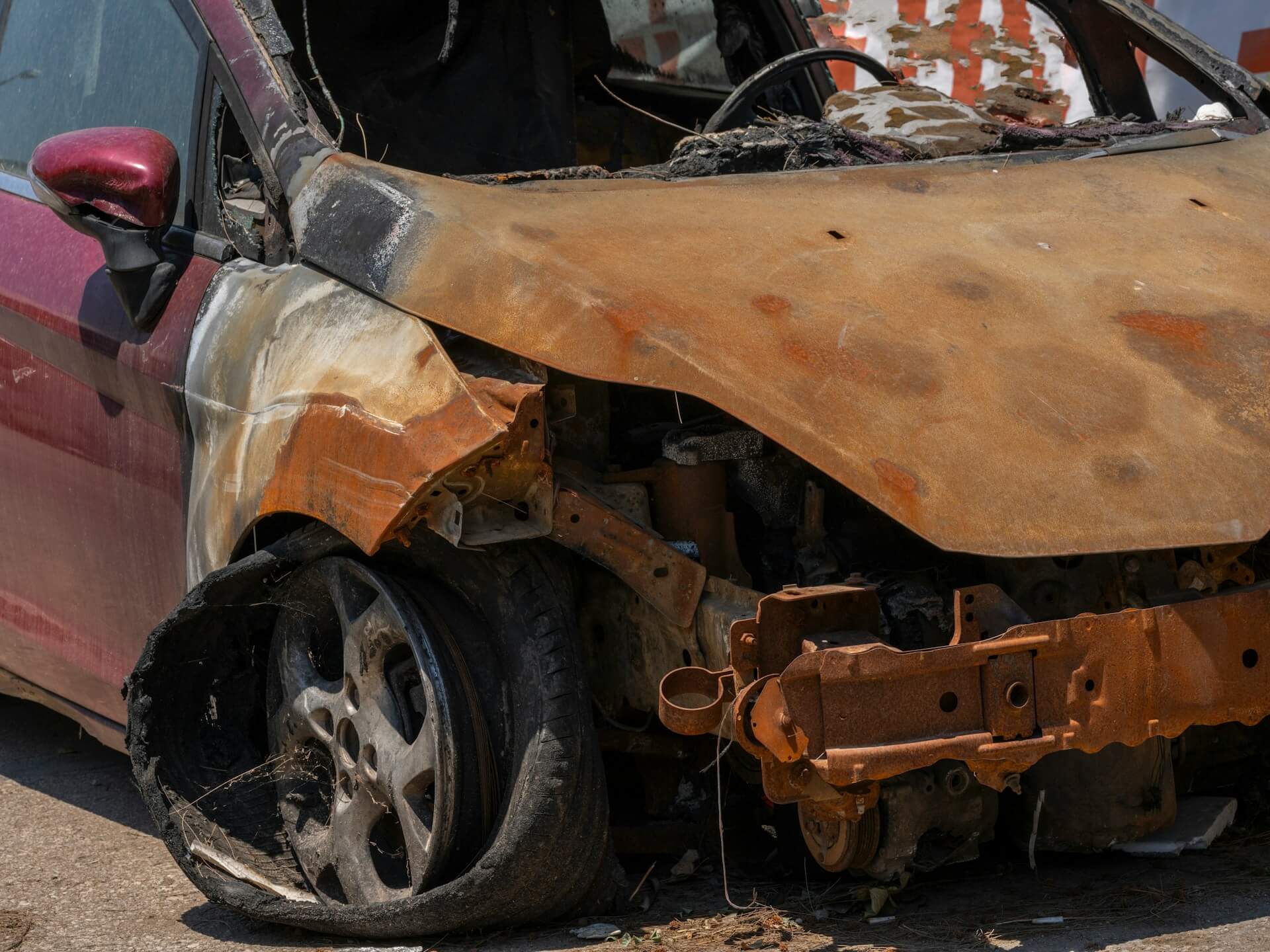
- Clearing a salvage title in NC follows one sequence: repair the vehicle, document every part, pass the NC salvage inspection, and file the rebuilt title application.
- Receipts, VIN-verified parts, and clear repair photos are essential. Missing documentation is the most common reason for inspection delays or DMV rejection.
- Before committing to repairs, compare ACV, total repair cost, inspection fees, and expected rebuilt value to decide whether the project is financially worth it.
- NC inspectors focus on VIN consistency, SRS/airbag functionality, and structural integrity. Unresolved safety issues almost always lead to a failed inspection.
- You can legally register, insure, and drive the vehicle only after the rebuilt title is issued. Branded vehicles still carry reduced resale value.
- If the DMV rejects the application, correct documentation errors or schedule a reinspection. North Carolina allows you to resubmit without restarting the entire process.
- Expect the full process to take several weeks, depending on part availability and inspection volume.
FAQ
Do I Need a Valid NC Driver’s License to Apply for a Rebuilt Title?
No. In addition to a local driver’s license, you can bring other supporting documents that your office requests. This may be, for example, a government-issued ID.
Does NC Require a Separate Safety Inspection After the Salvage Inspection?
Usually, yes. The inspection is the anti-theft and rebuild check, while the annual vehicle inspection is required before plates are issued or renewed.
Why Does North Carolina Inspect VIN Plates So Strictly?
This is mainly to stop fraud and protect buyers.
– VIN plate tampering can hide a stolen vehicle or a swapped identity.
– Missing labels can block verification of factory safety equipment.
– Swapped tags can make a total loss by an insurance company seem normal on paper.
What Can I Do If My Lienholder Refuses to Authorize Clearing the Salvage Title?
Ask for the reason in writing. Feel free to share your plan, receipts, and photos. If they still refuse, consider refinancing. Pay off the lien for a release if needed. Sell the vehicle and satisfy the lien at closing.
Does Flood Damage Affect My Ability to Clear a Salvage Title in NC?
Flood cases are watched closely because corrosion can return long after repairs.
– Water can damage SRS modules, wiring, and connectors.
– Mold and rust can make a vehicle with a salvage title unsafe.
– Extra testing helps show it is safe to drive and roadworthy.