Bring a Trailer is best for rare, collectible, and story-driven cars where presentation and community discussion can increase final prices, while Cars & Bids is better suited for newer enthusiast vehicles with faster browsing, structured listings, and lower seller friction.
These two platforms look similar, but small rules change the outcome. This guide reviews Cars and Bids vs Bring a Trailer and compares fees, workflow, and risk points so you can choose.
Platform Overviews at a Glance
On auto auction sites, Bring a Trailer and Cars and Bids are actively discussed between both buyers and sellers. Beyond their shared auction format, the two platforms shape the market in different ways. Bring a Trailer has become a reference point for collectible-car pricing, while Cars & Bids has carved out a niche for late-model enthusiast cars and first-time online sellers. Their communities reward different listing styles, and buyer expectations shift depending on where a vehicle appears. As a result, many shoppers monitor both sites to track demand trends.
What Is Bring a Trailer?
Bring a Trailer (BaT) is a curated auction site where comments can steer the final number. The platform is known for detailed write-ups, strong photos, and tough questions. Customers like the public Q&A because it reduces guesswork before they place a bid. It attracts classic and collector cars, plus oddball car finds that need a big audience. Sellers can run a no-reserve auction or set a reserve for protection. Most cars run as a 7-day auction with extensions if a late bid lands at the end.
What to expect on BaT:
- Staff review before your listing is scheduled.
- Community Q&A that can raise or lower the sale price.
- Optional photo upgrades, including a professional photographer to take photos.
BaT says sellers pay $99 and buyers pay a 5% fee (minimum $250, cap $7,500 for most cars).
What Is Cars & Bids?
Cars & Bids is an auction website focused on modern enthusiast cars. It’s built for speed: filtering and saved searches matter. The write-ups are practical, with photos and records laid out clearly. Many car enthusiasts like that the pages are easy to scan on an online car search. Doug says the goal is to make it easier to buy and sell interesting cars.
What to expect on C&B:
- A focus on searchable specs and strong photos.
- A template-driven write-up reviewed by staff.
- A growing community that asks direct questions.
Cars & Bids states the buyer’s premium is 5% with a $250 minimum and a $7,500 cap.
Fee Structures: Buyer & Seller Costs Compared
Fees change your total when the number looks similar. BaT uses an upfront listing fee for sellers, then a winner’s fee. C&B typically has no dealer charge, then a winner’s fee. That’s why Cars and Bids and Bring a Trailer are closer on buyer cost than many assume. Auction houses charge both sides, so online costs can be simpler. Still, budget for shipping, tax, and inspection outside the auction process, because your bid is binding once placed.
| Cost item | BaT | Cars & Bids |
| Seller posting cost | $99 listing fees | No seller listing fees |
| Winner platform fee | Charges a 5: 5% buyer fee (min $250, cap $7,500) | Bids charges a 5% fee (min $250, cap $7,500); older terms mentioned 4.5 percent |
| Photo add-ons | Optional Plus photo service | Photo guidance and staff requests |
| When it’s paid | Seller at submission; winner at close | Winner at close; seller pays $0 to list |
Seller Experience & Auction Workflow
A seller wins by reducing unknowns: photos, records, and fast replies for a smooth selling experience. BaT leans toward a curated presentation, while C&B favors a streamlined approach. The seller’s reserve should be realistic so you can meet the reserve without stalling momentum. Answer questions fast, post photos, and keep every claim backed by paperwork – that’s the core selling process. For white-glove help, BaT’s paid photo service removes busywork.
BaT seller workflow:
- Submit details, photos, and provide proof of ownership.
- Work with staff to finish the description and schedule the listing.
- Stay active in comments, adding updates when needed.
- Close with the highest bidder and complete payment and pickup steps.
Cars & Bids seller workflow:
- Upload photos, service records, and disclosures.
- Work with an auction manager on edits and timing.
- Respond during the auction so questions don’t linger.
- Close, confirm funds, and hand off title and keys to the customer.
Buyer Experience & Bidding Process
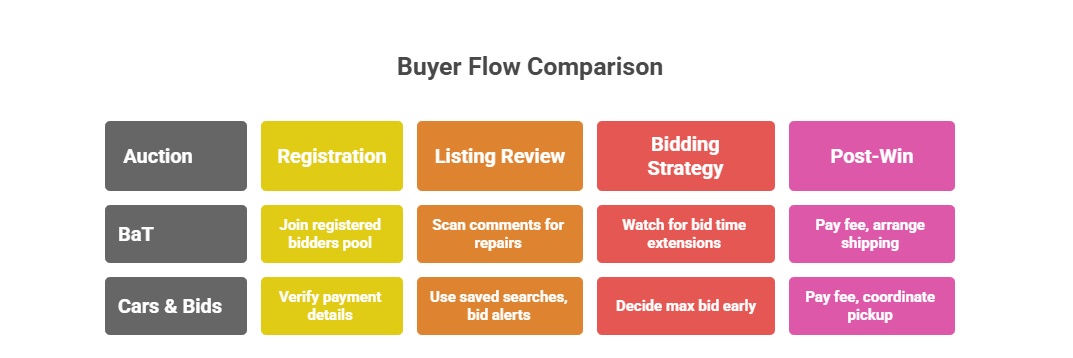
For the buyer, patience beats impulse. BaT’s comments can feel like a crowdsourced inspection, while C&B’s layout helps car buyers compare faster. Both sites require verification before you bid, and each bid is visible with a running history; don’t chase a bid past your budget. This is car buying, so treat it like a contract.
BaT buyer flow:
- Register and join the pool of registered bidders.
- Read the listing, then scan comments for repairs or gaps.
- Place a bid and watch for bid time extensions near the end.
- Win, pay the buyer’s fee, then arrange shipping and paperwork.
Cars & Bids buyer flow:
- Create an account and verify payment details.
- Use saved searches; bid offers alerts for cars for sale you’re tracking.
- Decide your max bid early, then stick to it.
- Win, pay platform fees, then coordinate pickup with the seller.
Documentation, Transparency & Verification Requirements
Documentation separates a clean deal from a headache. BaT’s robust community often pressures dealers to prove claims with photos and receipts. C&B often includes a history report and encourages buyers to double-check key details. A VIN decoder helps confirm trim and options, but it won’t reveal rust, poor repairs, or shortcuts in bodywork. Match paperwork to photos, verify the vehicle identification number, and confirm title status. For federal disclosure requirements related to used-vehicle documentation, see the Federal Trade Commission’s guidance on the Used Car Rule.
| Checkpoint | BaT | Cars & Bids |
| Ownership checks | Identity confirmation plus documents | Identity confirmation plus documents |
| History support | Buyers research; comments request proof | Bids provides a history report |
| Transparency style | Heavy community discussion | Cleaner write-ups and quick updates |
| Verify before you pay | The vehicle’s VIN and receipts | The vehicle’s VIN and receipts |
Vehicle Types & Market Positioning
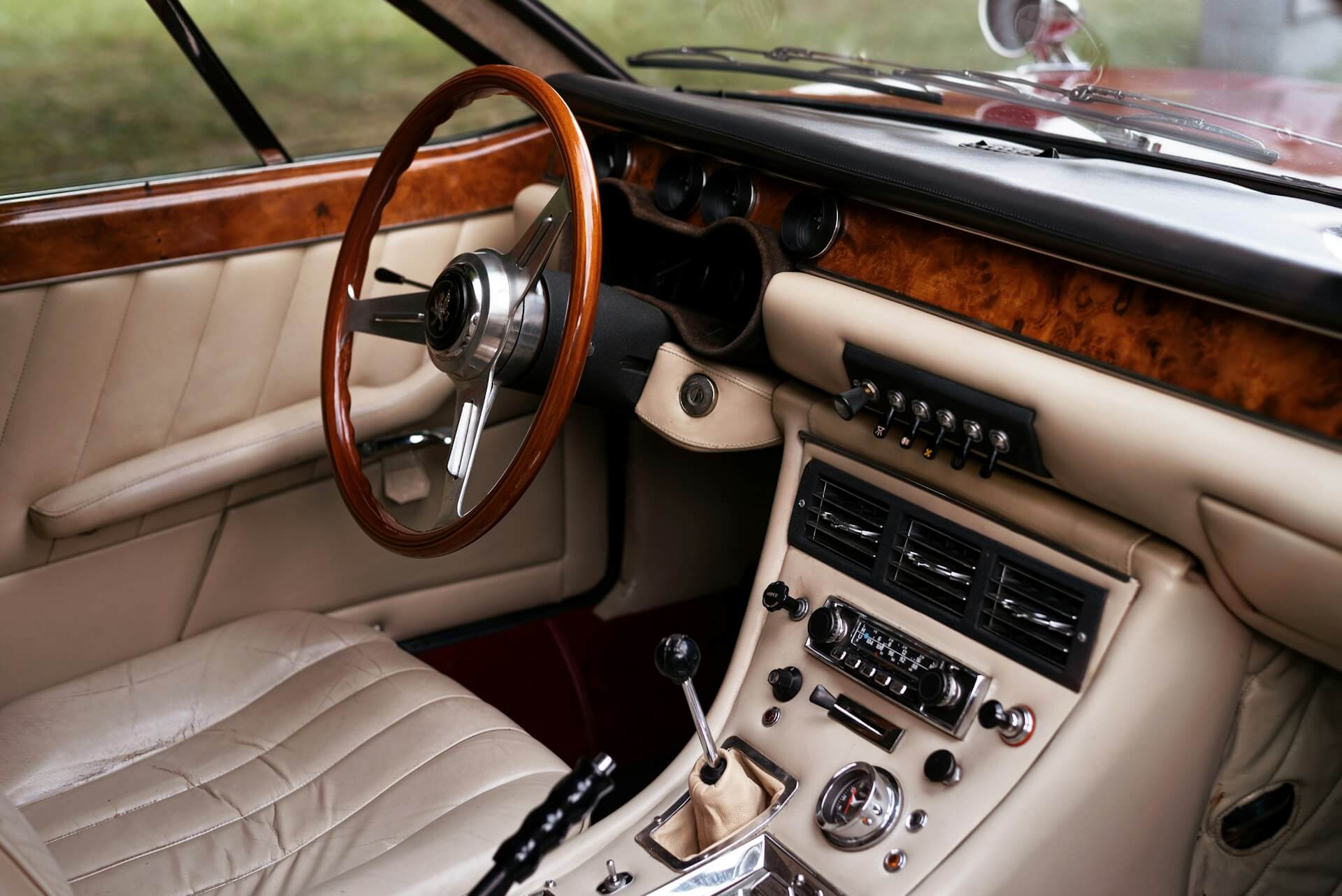
Both platforms overlap, but their sweet spots differ. BaT is strongest when the story matters – rare options, restorations, and unique vehicles that need a wide audience. Cars & Bids is strongest when specs matter – exact year, transmission, and mileage for a driver-grade car. BaT also draws high-end collectibles where presentation is everything. Compared with big car auctions, the inventory mix is the real difference.
BaT inventory tends to include:
- Older car builds, restorations, and story-driven cars.
- Limited-production cars and unusual trims.
- Oddball cars that need a big audience.
Cars & Bids inventory tends to include:
- Newer enthusiast cars and daily-driver icons.
- Spec-heavy listings with sharp photos and records.
- Modern performance and comfort-focused cars.
Legal, Compliance & Transaction Rules
Both services are marketplaces, not dealers. Automotive rules for tax, emissions, and title transfer still apply, and you should keep records for any exceptions. In practice, this means buyers and sellers must treat every auction result as a state-level transaction, not a platform-managed sale. Requirements for smog checks, temporary permits, notarization, or lien releases can differ widely depending on where the vehicle will be registered. Some states also impose strict timelines for submitting title paperwork, and delays can lead to penalties or rejections at the DMV. For reference, state DMVs publish these requirements publicly, such as the California DMV’s guidance on vehicle registration and title rules.
Title Transfer and State-Level Requirements
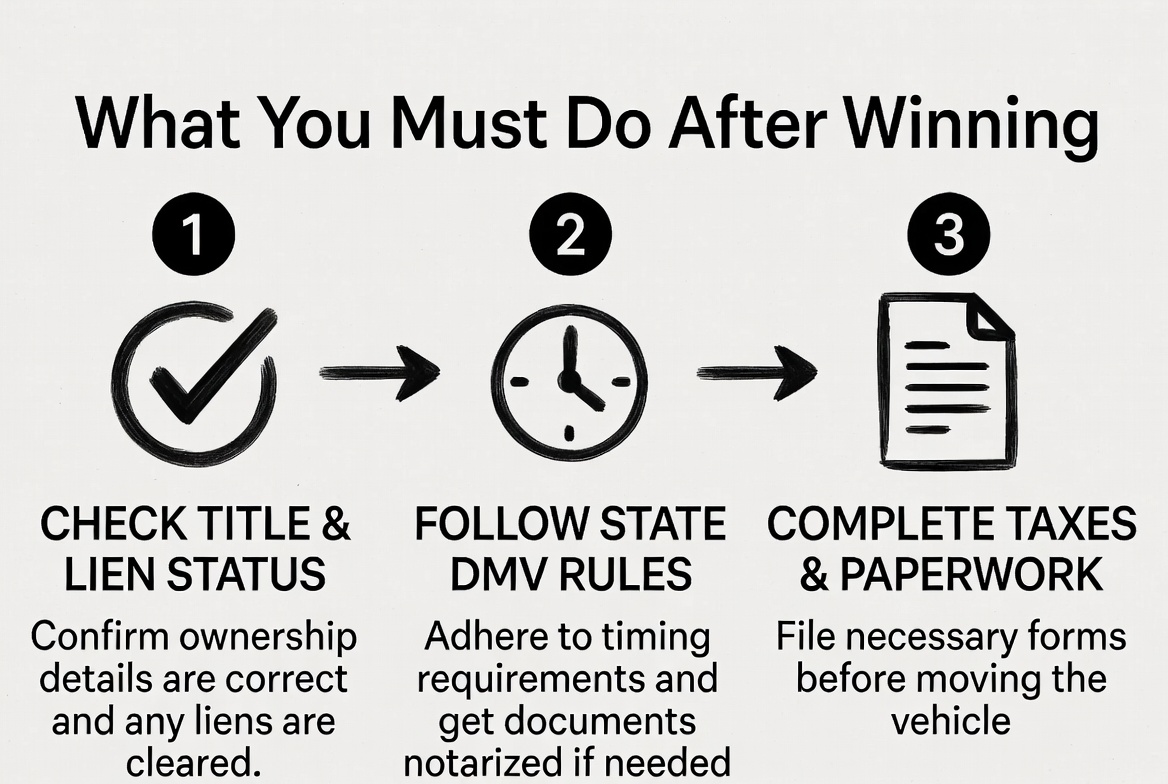
Paperwork is where an online win can turn stressful for a car. Both platforms expect the parties to handle taxes, shipping, and DMV steps, and each state has different timing and notary rules. If a title is branded, confirm what your state allows before you pay. Unlike salvage auction platforms, these listings behave like private-party deals, so verification is on you.
| Topic | BaT | Cars & Bids |
| Taxes | Paid when registering locally | Paid when registering locally |
| Transfer handling | Optional closing tools; parties still coordinate | Closing support may be offered; parties still coordinate |
| What to check | Title branding and lien status | Title branding and lien status |
| Best practice | Verify docs before transport | Verify docs before transport |
User Reviews, Community Feedback
Reviews reveal moderation style, support quality, and how disputes are handled. Use them to spot patterns before you commit, when a big bid is on the line. These impressions do not represent our team’s views; they are aggregated from public review platforms, forums, and user reports to reflect common experiences across the community.
Bring a Trailer Reviews
Bring a Trailer reviews often praise the excitement but criticize moderation and post-sale support. Some buyers say the comments help, yet they still recommend inspections. Others complain that critical questions are delayed or removed. Below are real examples from public review platforms:
Pros:
- Many sellers report fast, successful sales and access to buyers they wouldn’t reach otherwise.
- The listing process is simple and guided, with clear instructions and professional formatting.
- An active community helps surface honest insights about vehicles.
- Customer support is often described as responsive and willing to resolve issues.
- Platform tools (notifications, contact sharing, payment/delivery options) make transactions smooth.
Cons:
- Some users feel BaT pushes no-reserve auctions and limits listing wording too tightly.
- Complaints about comment moderation: unfair deletions and ignoring false or harmful posts.
- Occasional cases of insufficient vetting of sellers or listing accuracy.
- Perception that BaT prioritizes commission over user fairness.
- Long-time users note declining listing quality as the site becomes more mainstream.
Cars & Bids Reviews
Cars & Bids reviews are generally positive about communication and the user experience. Many mention fast answers from staff and clear steps for first-timers. Some still note that platform fees add up, so they advise budgeting before bidding. Below are real examples from public review platforms:
Pros:
- Many buyers and sellers report seamless, well-organized transactions from listing to pickup.
- SafePay/KeySavvy escrow receives strong praise for security, paperwork support, and ease of use.
- Customer support is described as fast, helpful, and genuinely car-savvy.
- Community engagement is high, with thoughtful comments and guidance that build confidence.
- Users consistently highlight high-quality listings, good data transparency, and fair fees.
Cons:
- Some sellers report overly strict photo standards and long back-and-forth during listing approval.
- Complaints about limited seller control, including pressure to list with no reserve.
- A few users describe poor moderation: blocked comments, unresolved errors, or unfair handling of listings.
- Isolated claims of misleading practices or manipulation affecting auction outcomes.
- Buyers note that the platform lacks sufficient protection when undisclosed mechanical issues arise.
Which Platform Is Best for You?
For buying or selling a rare story car, BaT can set a new record. For newer drivers and quicker browsing, choose C&B. That said, the right platform often depends on your priorities: BaT tends to reward deep documentation and presentation, while Cars & Bids appeals to shoppers who value clear specs and fast decision-making. If you’re selling a vehicle with unique provenance, BaT’s comment-driven culture can surface details that increase value. If your car is newer or modified, C&B’s audience may be more aligned with what you’re offering.
SCA Auction Overview: Alternative to Bring a Trailer vs Cars and Bids
SCA Auction is a competitor for shoppers who want volume and accept damage disclosure as normal. It’s an online car auction site that lists repairable, clean, lightly damaged, and salvage-title units, and it’s open to the public. Much of its sourcing is tied to IAAI inventory, one of Copart’s top competitors, which means a steady flow of insurance-style lots. Fees vary by membership and are tied to the purchase price, so read the fee sheet before you bid. Expect strict timelines, as-is terms, and added yard fees.
Why do many treat SCA as one of the most reliable options in its lane:
- Large inventory and clear fee rules.
- Membership tiers that spell out transaction costs and limits.
- Search tools by damage, title branding, and location.
- Guides that explain bidding, payment, and pickup steps.
The SCA site advertises 300,000+ vehicles and 150+ weekly live auctions.
Summary

- Bring a Trailer (BaT) excels with presentation-heavy, story-rich vehicles and benefits from a highly engaged comment community that can boost final prices.
- Cars & Bids (C&B) works best for newer, spec-driven enthusiast cars and offers faster browsing with a modern, streamlined layout.
- Buyer fees are similar on both platforms, but seller costs differ, so always compare your total expected expenses.
- Before bidding, review photos like an inspector, confirm records, and request additional shots of areas that tend to hide issues.
- After winning, plan transport, verify paperwork early, and keep a clear message trail to ensure a clean, traceable transaction.
- Choosing the right platform depends on your priorities: BaT for curated exposure, C&B for speed and simplicity.
This approval depends on photo quality and documentation. BaT reviews submissions before scheduling, while Cars & Bids can move faster once edits are complete. Many dealers see anything from a few days to roughly two weeks.
The most overlooked risk is trusting photos over reality. Hidden rust, rushed repairs, or mismatched parts can appear after delivery, especially on a car with engine replacements. A paid inspection and written answers reduce surprises.
Long storage usually leaves clues. Look for:
– Dry-rot tires or flat spots.
– Stale fuel smell or hard, cold starts.
– Corrosion on brake rotors and fasteners.
– Battery date codes showing repeat failures.
– Dust patterns in the engine bay and trunk.
Later model years in a generation often perform better because they include updated parts, revised software, or improved interiors. Still, condition and records matter more than the badge on the trunk.
Reserve setting should follow the market, not hopes. To improve your chances:
– Compare recent comps for the same trim and options.
– Adjust for maintenance history and modifications.
– Factor in visible flaws and needed repairs.
– Set it where you’re comfortable, even if bidding stalls.